Broccoli Microgreens: The 10-Day Crop That Handles Real Conditions
Broccoli microgreens: harvest in 7-14 days, handle imperfect light, and pack concentrated nutrition. A reliable crop for growers who want results without the wait.

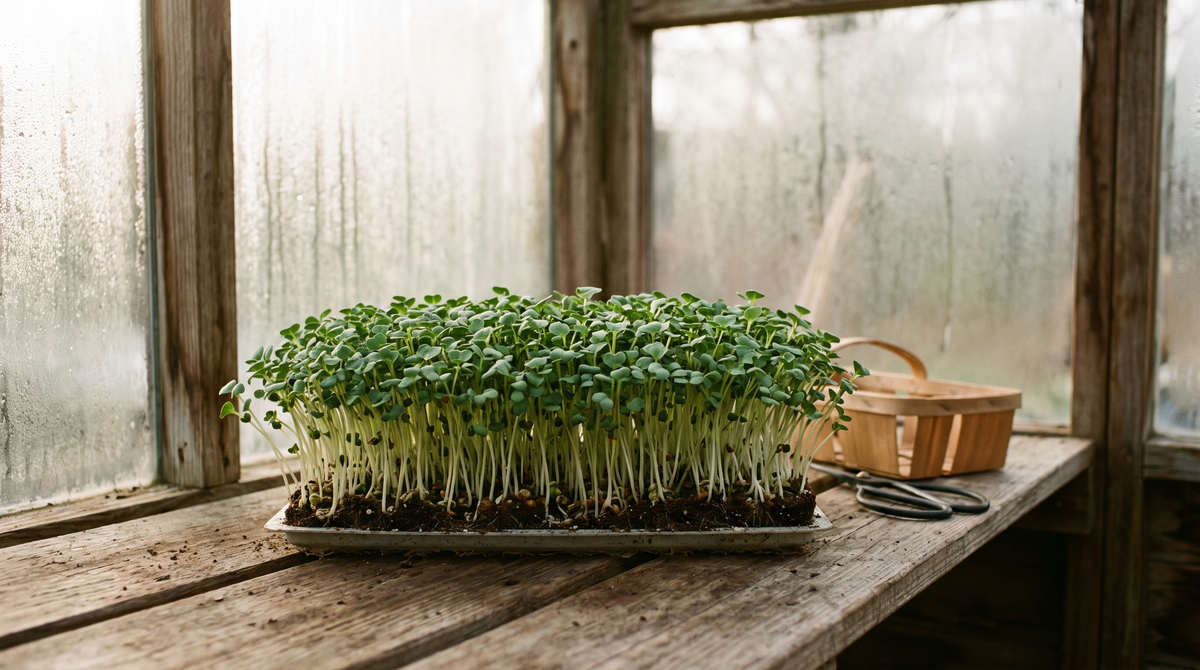
Most vegetables make you wait. Broccoli microgreens don't.
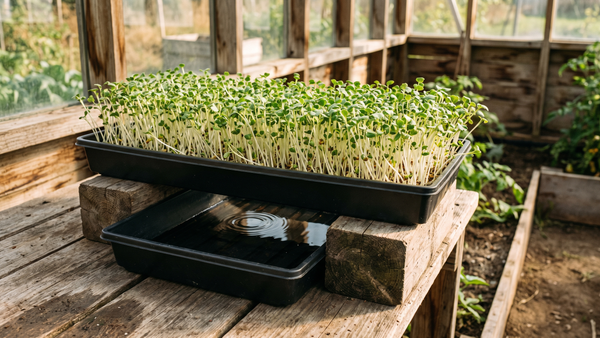
The typical harvest window runs 7 to 14 days. Some growers push the early end under ideal conditions. Others hit day 12 or 14 and still get a usable crop. That range comes from University of Maryland Extension bulletins and matches what we've seen in our own greenhouse.
Shirley ran a test batch in February on the covered porch. Limited light - about four hours of morning sun. The rest of the day sat under shade cloth. She harvested on day 12. The stems looked paler than greenhouse-grown trays, but the crop came through.
That test showed what "low light tolerant" actually means. It does not mean growing in darkness. Broccoli microgreens still need 12 to 16 hours of light daily for proper development. In dimmer conditions, the stems stretch longer searching for light. The color goes lighter. The leaves stay smaller. You get a different-looking product, but you still get a crop.
This resilience matters for growers dealing with variable conditions.
The Nutrition Context
Broccoli microgreens carry the same compound that gets researchers interested in mature broccoli: sulforaphane. Studies have measured concentrations 40 to 100 times higher than full-grown broccoli heads. Xiao et al. documented this in the Journal of Agricultural and Food Chemistry in 2012.
That does not mean microgreens replace vegetables. A serving is small - a sprinkle on eggs, a light layer in a sandwich. But within that volume, the nutrient concentration packs a punch.
Why the Speed Matters
Broccoli microgreens run Brassica oleracea var. italica harvested at the cotyledon stage. The plant is pumping stored energy into rapid growth. You catch it at that early window.
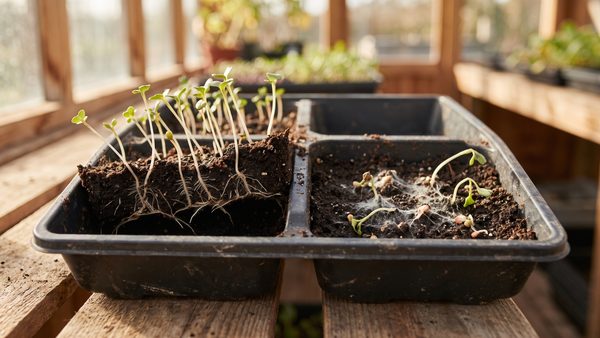
The speed changes the feedback loop. With a crop that takes six weeks, a mistake in week four means nearly two months before you can adjust and try again. Broccoli microgreens complete a full cycle in under two weeks. Test different sowing densities. Adjust watering. You'll see results before the month ends.
Shirley uses broccoli as a baseline for new setups. If broccoli struggles, other varieties will too. If broccoli thrives, you have data for decisions on more demanding crops.
Temperature and Environment
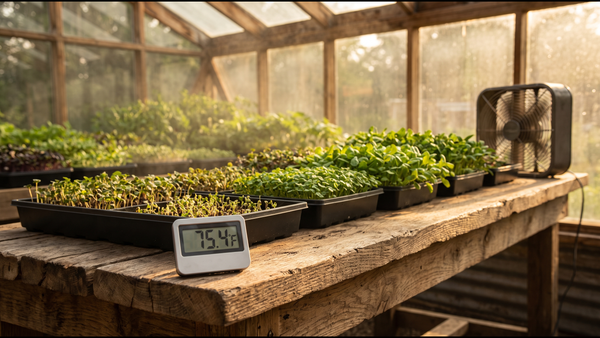
Broccoli germinates across a 60 to 75 degree Fahrenheit range. That spread covers most seasonal conditions without supplemental heating or cooling. The variety handles humidity better than more delicate options, provided drainage and airflow stay adequate.
For growers in variable climates, this tolerance translates to fewer failed trays and more consistent output.
Final Thoughts from Wilshires Organics
Broccoli microgreens sit at the intersection of fast and forgiving. Ten to fourteen days from seed to harvest. Tolerance for conditions that would stall pickier crops. Documented nutritional density.
We treat them as a backbone crop. When customers ask what's available, broccoli microgreens are usually part of the answer. When testing new equipment or locations, broccoli gives quick feedback.
The crop delivers without demanding perfection. That combination - speed plus resilience - makes it a practical choice for growers and a reliable option for eaters.
Want fresh-cut microgreens this week? We harvest to order in Ocala and have them ready for pickup. See what's available and reserve your tray.