Stop Mold Before It Starts: Why Airflow Around Microgreens Matters Before the Tray Looks Full
Learn why airflow matters for microgreens before the canopy fills in. Practical guidance from a small Ocala farm on preventing mold with early air movement.

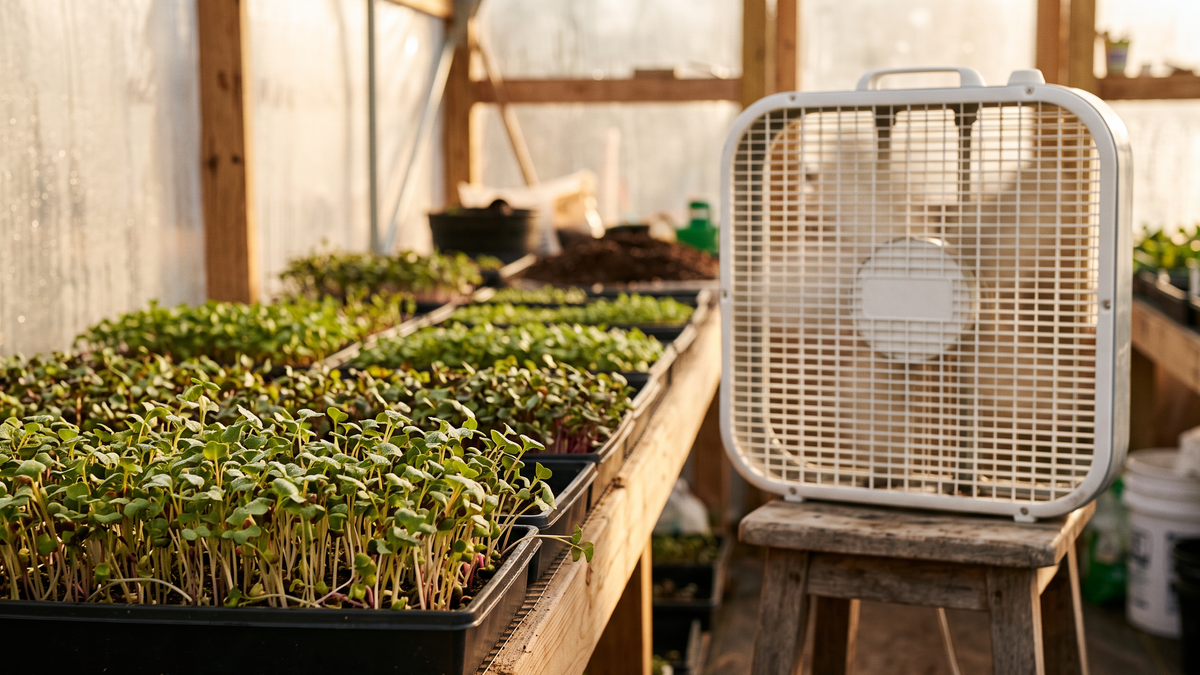
We lost a tray of arugula one humid stretch in Ocala. Damping off hit fast. We hadn't been running a fan in that section, and the timing got our attention. It didn't prove the missing fan was the only cause, but it made us stop waiting until trays looked crowded to think about air movement.
That's the point. Most growers wait until the canopy fills in to worry about airflow. By then, the conditions that favor mold have already been sitting on your tray surface for days.
What Actually Happens at the Tray Surface
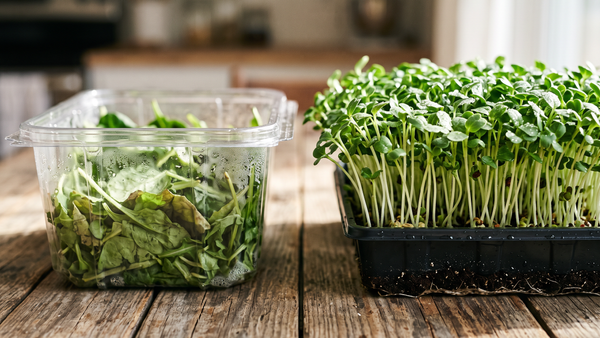
Still, humid air at the tray surface creates conditions that can favor mold growth if spores are present. UMass Extension says the highest relative humidity in a greenhouse is generally found inside plant canopies, where moisture from transpiration gets trapped by insufficient air movement. That trapped moisture promotes fungal spore germination. Botrytis and powdery mildew love it.
Here's the thing. A sparse tray of seedlings still has a boundary layer around each plant and around the wet media surface. Still air traps transpired moisture near the surface even when plants are small. The mechanism doesn't switch on when the canopy closes. It's there from day one.
That's our core argument, and we want to be honest about its limits. No study we could find directly tests airflow as a variable for mold or damping-off prevention in microgreens specifically. The evidence comes from three places: research on how air movement affects gas exchange in plant canopies (Kitaya et al. studied sweetpotato and tomato, not microgreens), extension guidance recommending gentle airflow for growing microgreens, and food safety research showing high humidity favors pathogen development. The connection for microgreens specifically is a reasonable inference, not a directly tested result.
Germination: Cover First, Vent Early
Most extension guides recommend covering trays during germination to retain warmth and moisture. That's not wrong. But they also say to vent those covers periodically so extra moisture doesn't encourage mold. The University of Maryland Extension puts it plainly: vent tray or container covers used to boost humidity.
Once the cover comes off, gentle airflow should begin. Utah State Extension says plants need constant airflow, using a gentle-blowing fan. Penn State Extension recommends opening a window occasionally to enhance air circulation and avoid excess moisture.
Here's the honest part. No extension source specifies an exact day or growth stage to make the transition from covered germination to uncovered airflow. We're presenting a practical sequence based on extension principles, not a research-validated protocol. Cover for germination. Vent periodically. Start gentle airflow when the cover comes off. That's the best guidance available.
What "Adequate" Airflow Actually Looks Like
No extension source provides a specific air velocity target, fan distance, or runtime schedule for microgreen-scale production. The Kitaya et al. study found gas exchange improved significantly when air current speed increased from 0.01 to 0.2 m/s in sweetpotato and tomato canopies, and continued improving up to 1.0 m/s. Those are not microgreen recommendations. Don't transfer those numbers to your trays.
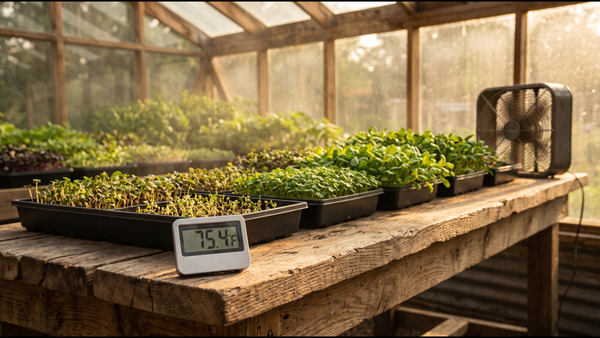
So here's a practical definition instead. Adequate airflow means the media surface dries between waterings without seedlings wilting. Check for visible condensation on plant surfaces. Check for persistent surface wetness. If you see either, airflow is likely insufficient. If seedlings are drying, curling, or wilting at tray edges or closest to the fan, airflow is too much or too direct.
The goal is gentle, even air movement around the tray, not a direct blast. Check the driest and wettest spots on your rack to see if air is moving evenly.
Airflow Is One Tool, Not a Guarantee
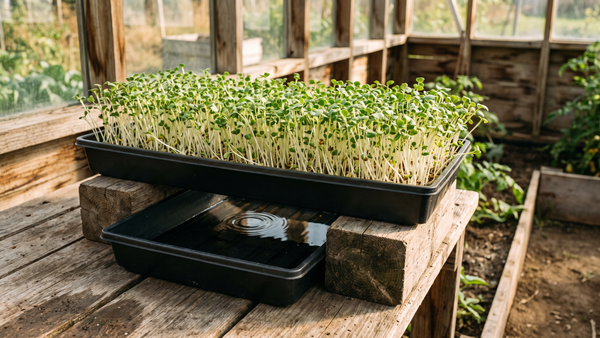
We've said this before and we'll say it again. Airflow helps reduce the conditions that favor mold growth. It does not prevent mold by itself. It works alongside bottom watering, sanitation, proper seeding density, and drainage. Damping-off pathogens thrive in cool, wet conditions, and overwatering contributes as much as still air does.
Microgreens and sprouts are different products with different production methods and different regulatory frameworks. Don't confuse them. Food safety research on microgreens (Xavier et al. 2025, Wright and Holden 2018) shows high humidity cultivation conditions can favor pathogen development, but that's about awareness, not about applying sprout rules to microgreens.
In humid climates like ours in Ocala, ventilation alone may not lower moisture enough. Compare indoor and outdoor readings rather than assuming open vents will always dry the air. A circulation fan mixes air already inside. Ventilation replaces it. They do different jobs.
Final Thoughts from Wilshires Organics
Don't wait until the canopy fills in to think about air movement. The conditions that favor disease can develop before the tray looks full. That's a prevention mindset, not a proven threshold. No one has measured surface humidity above a sparse microgreen tray versus a full one. The research gap is real.
But the mechanism is real too. Air movement thins the boundary layer around leaves and around wet media. That boundary layer exists from day one. Starting gentle airflow early costs you almost nothing. Waiting costs you trays.
We'd rather run the fan early and not need it than skip it and lose another tray.