Is Your Microgreen Tray Staying Too Wet? Use Drainage to Keep the Root Zone in Check
Learn how tray drainage helps you manage excess water in microgreens, with practical limits on what drainage can and cannot do.

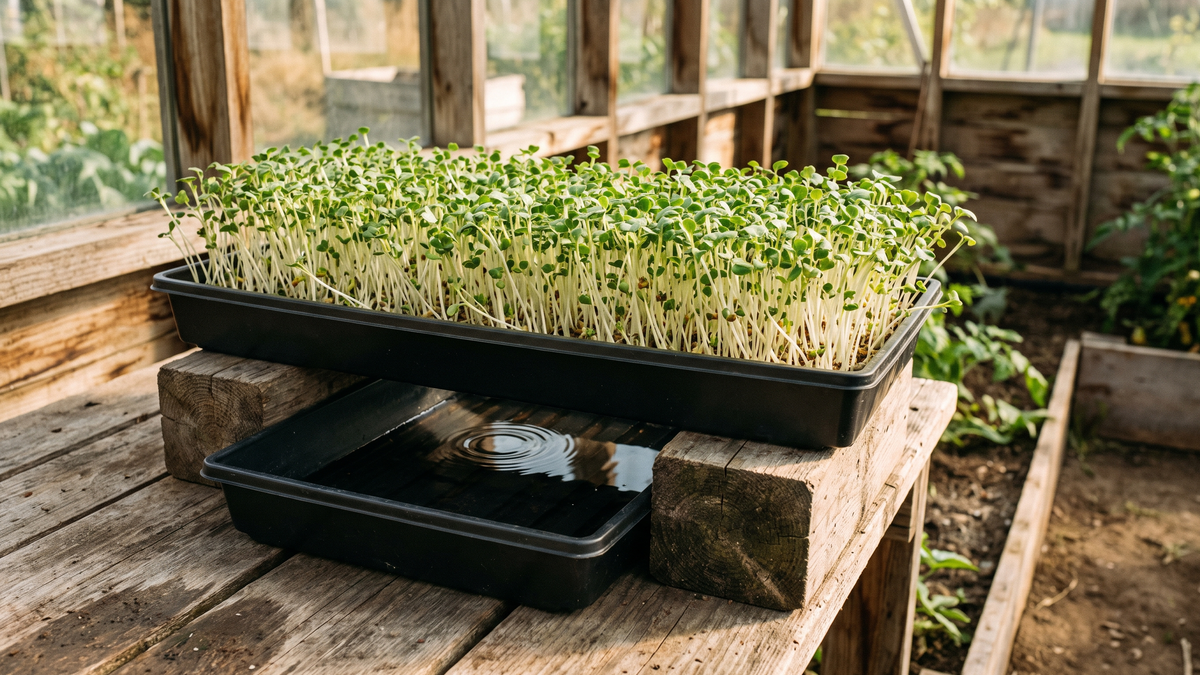
Drainage is easy to overlook when you are focused on seed, growing medium, light, and harvest. But it changes one basic part of the setup: whether surplus water can leave the root zone instead of hanging around in the tray.
That is the practical goal here. A tray and growing medium that let extra water drain away can help you avoid a medium that stays saturated and water left standing below it. It is not a promise of faster growth or a bigger harvest. It is a simple way to keep moisture from becoming more than the crop needs.
This advice is a careful application of seed-starting and plant-root evidence, not a tested microgreen tray design. University of Minnesota Extension advises using drainage holes in seed-starting containers and draining excess water that remains in a watering tray. Broader plant research explains why that matters: waterlogged conditions can limit oxygen around roots.
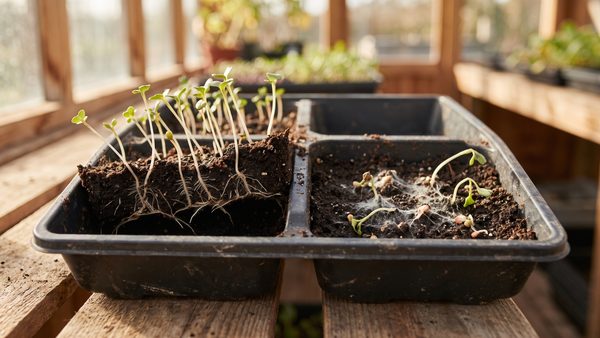
Microgreens are young plants grown in shallow containers, so the root zone is close to the bottom of the tray. When surplus water has nowhere to go, the medium can stay wetter than intended. A setup that allows it to leave gives you a clearer starting point for managing moisture.
Think of drainage as a practical objective, not a performance claim. The evidence supports avoiding a persistently saturated root zone. It does not establish one tray pattern, one hole layout, or one result for every microgreen crop.
There is useful transfer evidence from other plants. Root research identifies low oxygen around roots as a feature of waterlogged soil. A lettuce experiment also found that oxygen-enriched irrigation eased stress during prolonged waterlogging under that study's conditions. Those findings help explain the general principle, but they are not proof that a particular microgreen tray will perform a certain way.
The useful question is plain: after watering, is the medium moist, or is it sitting in pooled water? That check keeps attention on the condition in front of you instead of chasing a universal rule.
A Simple Check After Watering
Start with the tray and medium you are already using. The aim is to give surplus water a way out and to drain water that collects below the tray. Then look at the growing medium after watering. It should be moist rather than sitting in pooled water.
That does not mean every tray will look the same. Crops, growing medium, temperature, airflow, and the amount of water applied all affect how quickly a tray changes. The point is not to force a rigid schedule. It is to notice when water is still sitting where the roots are growing and correct that condition before treating it as normal.
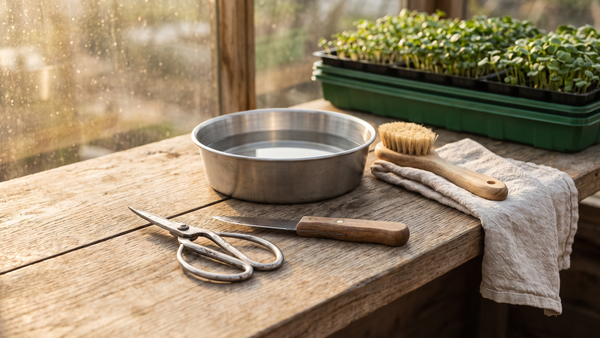
Keep reusable trays in the same practical mindset. University Extension guidance for seed-starting containers recommends cleaning reusable containers, then using a label-directed disinfectant solution and rinsing before reuse. Choose a product and method suitable for your operation, and follow the label.
For covered produce operations, FDA rules include appropriate storage, maintenance, and cleaning of equipment and tools to prevent contamination of covered produce and food-contact surfaces. That is a separate question from drainage, but it belongs in the same overall habit of paying attention to trays, water, and equipment.
Good drainage does not replace clean water, clean equipment, or other contamination controls. It is a growing-management choice, not a food-safety control.
That boundary matters because controlled inoculation studies on microgreens show that contamination can move through more than one route. In one experiment across nine microgreen species, contaminated irrigation water produced higher STEC colonisation than direct seed contamination under the study conditions. Another inoculated radish-microgreen study found that E. coli O157:H7 survived and proliferated in the systems tested. These are controlled studies, not a picture of normal contamination levels, a drainage study, or a ranking of irrigation methods.
Keep the job of drainage narrow and useful. Let surplus water leave the root zone. Drain water that remains in the tray. Check that the medium is moist rather than pooled. Then keep water, equipment, and sanitation practices in their own lane.
Final Thoughts from Wilshires Organics
Tray drainage is not a magic fix. It is one basic part of managing the growing environment. The practical takeaway is simple: set up the tray so surplus water can leave, drain what collects below, and pay attention to what the medium is doing after watering. That gives you a grounded way to manage moisture without making promises the evidence does not support.
Want fresh-cut microgreens this week? We harvest to order in Ocala and have them ready for pickup. See what's available and reserve your tray.