Want a Second Cut? The Honest Answer on Microgreen Regrowth
Can microgreens regrow after harvest? Most don't. Pea shoots may give a thin second cut. Here's what the research says and what actually works.

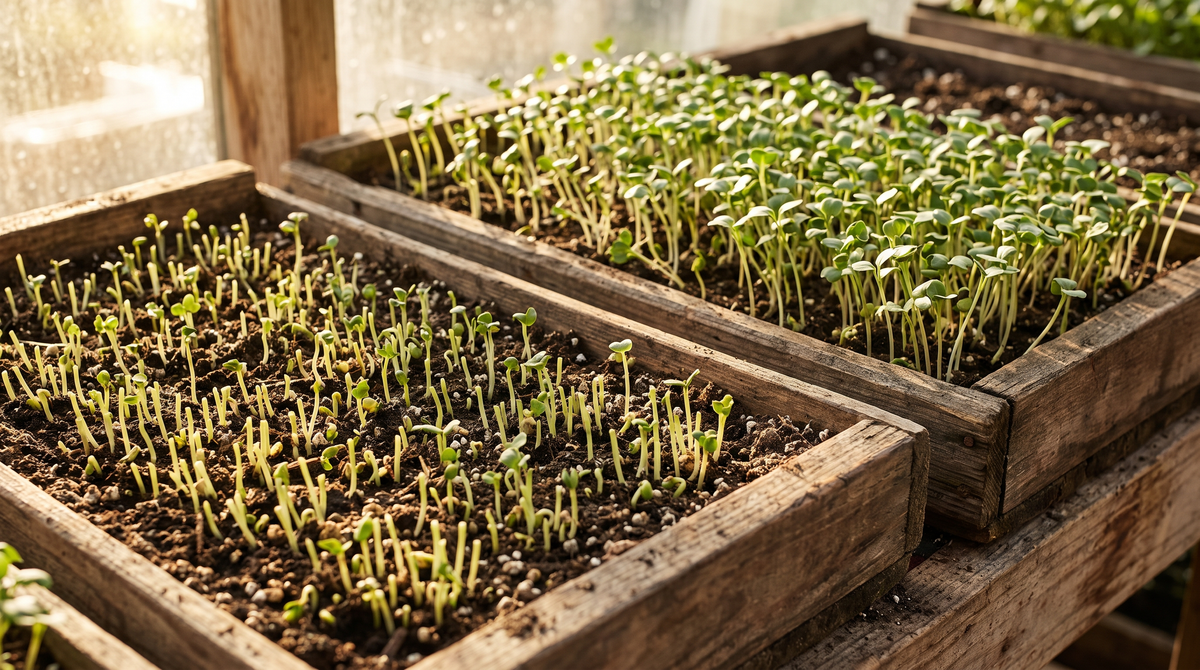
We get this question a lot. Someone buys a tray of microgreens, harvests them, and wonders if they can let it grow back for round two. Fair question. Seeds, soil, and labor all cost money. If you could double your yield from one tray, why wouldn't you?
The short answer: most microgreens don't regrow after harvest. A few crops may give you a thin second cut, but it won't match the first. Here's what the research says, what our own growing notes show, and where the line is between "might work" and "probably won't."
What the Research Actually Says
Here's the surprising part. No peer-reviewed studies exist on microgreen regrowth after harvest. We searched PubMed using seven different query combinations. "Microgreens" paired with "regrowth," "second harvest," "cut and come again," "regrow," "multiple harvest," and "harvest plus regrowth." Every single search returned zero results.
That doesn't mean nobody has ever grown a second cut. It means no researcher has studied it rigorously enough to publish. The comprehensive review of microgreen bioactive molecules published in Molecules (2023) describes harvesting as a single cut at the soil line. No mention of regrowth. No mention of a second harvest. The yield studies that do exist all measure single-harvest output only.
So when someone tells you microgreens regrow, they're working from grower experience and plant physiology, not from published research. That's worth knowing before you bet your next tray on it.
Why Most Microgreens Don't Regrow
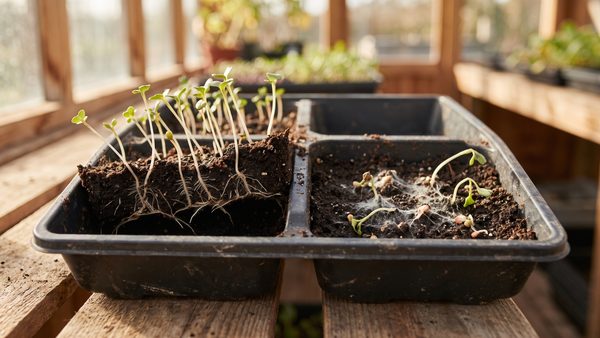
Microgreens are harvested young, typically 7 to 21 days after sowing, at the cotyledon or early true-leaf stage. The standard harvest method is cutting at the soil line. When you cut at the soil line, you remove the apical meristem, which is the plant's growing point. No meristem, no regrowth. That's basic plant physiology applied to the harvest method described in the peer-reviewed literature.
There's also an energy issue. Microgreens rely on seed reserves for their initial growth. After the first harvest removes the cotyledons and any true leaves, what's left is a stub with limited energy to fuel new growth. That's likely why second cuts, when they happen, are typically thinner and slower. This is a reasonable explanation from seedling physiology, not something a study has directly verified for microgreens.
The One Exception: Pea Shoots
Pea shoots are the crop most likely to give you a second cut. They have nodes along the stem where axillary buds can produce new growth if you cut above the lowest node. Our own pea shoots research brief says a second cut can happen with some trays, but the second harvest may be thinner and less consistent.
We don't promise second-cut quality. It sometimes works. It sometimes doesn't. Most growers replant for reliable yields, and that's what we recommend.
Sunflower Shoots and Other Varieties
Sunflower shoots typically do not regrow after cutting. Our internal research notes say to harvest at the first true leaf, around 8 to 12 days, and plan for a single harvest. Those notes originated from grower blogs, not peer-reviewed research, so we present this as practical grower consensus rather than established science.
Most other microgreen varieties, including radish, broccoli, mustard, and cabbage, follow the same pattern. One cut at the soil line, one harvest. Replant for the next round.
What About Wheatgrass?
Wheatgrass is a grass, and grasses have basal meristems that can theoretically regrow if cut above the growing point. Some growers report getting a second cut from wheatgrass trays. But no research has been done on this specifically for microgreen-stage wheatgrass, and we haven't tested it rigorously ourselves. If you want to try it, cut above the soil line and see what happens. Just don't count on it.
Cut-and-Come-Again: For Baby Greens, Not Microgreens
You've probably heard of cut-and-come-again harvesting. It's a real technique. One peer-reviewed study used it successfully on mizuna grown for 28 to 56 days. But those were baby greens with true leaves, established root systems, and multiple growing points. Microgreens harvested at 7 to 21 days don't have those structures yet.
Cut-and-come-again works for baby greens and mature leafy plants. It doesn't work for microgreens. They're different growth stages with different biology. Confusing the two leads to dead trays and wasted time.
Final Thoughts from Wilshires Organics
Here's the honest version. Most microgreens are a single-harvest crop. A few, like pea shoots, may give you a thin second cut if conditions line up. Sunflower shoots and most other varieties typically don't regrow. Wheatgrass might, but nobody has studied it properly.
If you're growing at home and want to experiment with a second cut on pea shoots, go for it. Just plant a fresh tray at the same time so you're not betting on something that may not deliver. For reliable harvests, replant. That's what we do.
Microgreens also contain compounds studied by researchers for their health-supporting properties. That's a separate topic from regrowth, but worth mentioning since it's part of why people grow them.
Got questions about growing microgreens? Check our harvest days order page or stop by the farm stand. We're happy to talk through what works and what doesn't.
Want fresh-cut microgreens this week? We harvest to order in Ocala and have them ready for pickup. See what's available and reserve your tray.