Florida Humidity Can Cost You Microgreen Trays: Manage Moisture from Seed to Storage
Florida humidity changes microgreen moisture management. Learn how to handle airflow, irrigation, condensation, sanitation, and cooling.

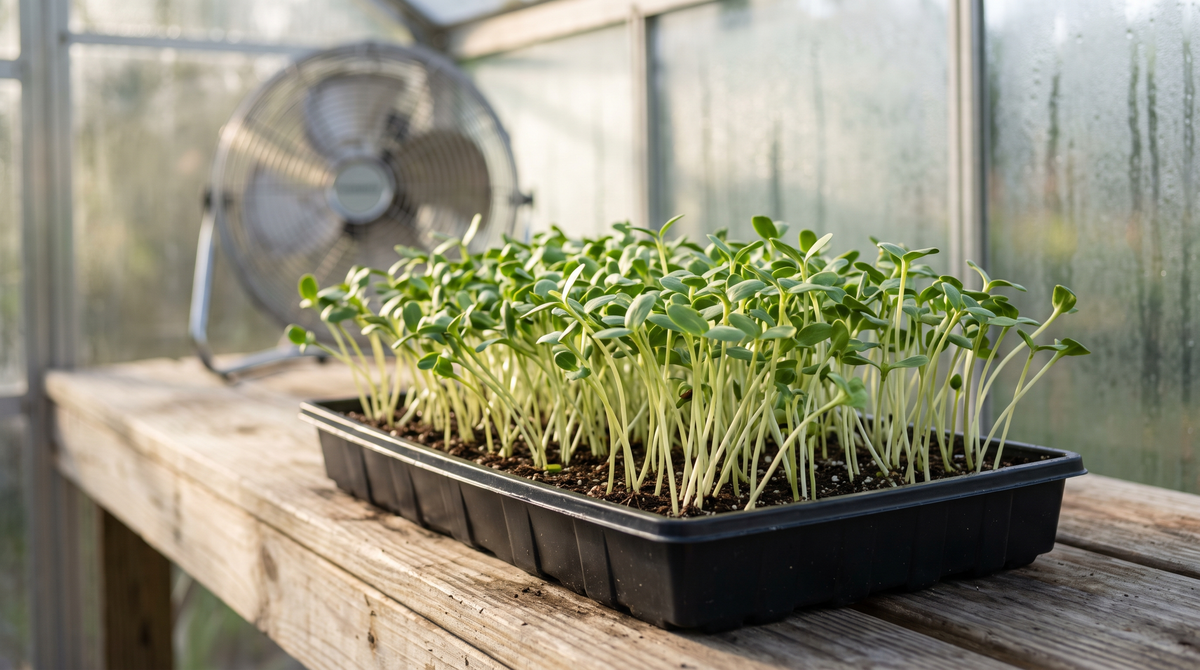
Growing microgreens in Florida doesn’t require different plant biology. It requires closer moisture management. Warm, humid conditions can favor damping-off, while condensation can leave plant surfaces wet and help fungal problems develop. The answer isn’t simply adding more fans. Growers need to watch how water moves through the whole system, from irrigation and wet floors to canopy air and cold storage.
Relative humidity alone doesn’t tell the whole story. It changes as air temperature changes, even when the amount of water vapor stays about the same. Dew point tells you the temperature at which that moisture can begin to condense. The Florida Climate Center reports typical summer dew points of 65 to 75°F across the state. That’s statewide climate context, not an Ocala greenhouse reading or a growing target, but it explains why Florida air often carries plenty of moisture.
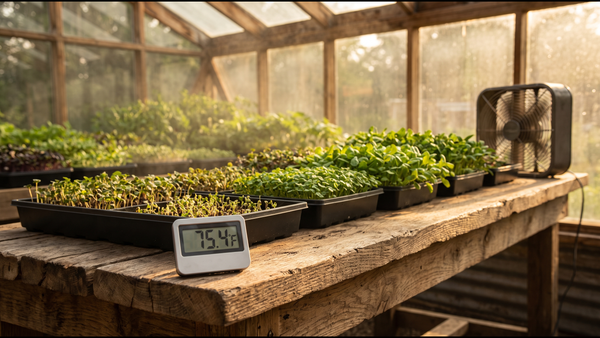
Inside a greenhouse, conditions can differ from outdoors because irrigation, plant transpiration, ventilation, cooling, and warm surfaces all affect the air. That’s why temperature and relative humidity should be read together at canopy level. Watch for condensation on leaves, trays, glazing, and other cooler surfaces as temperatures fall.
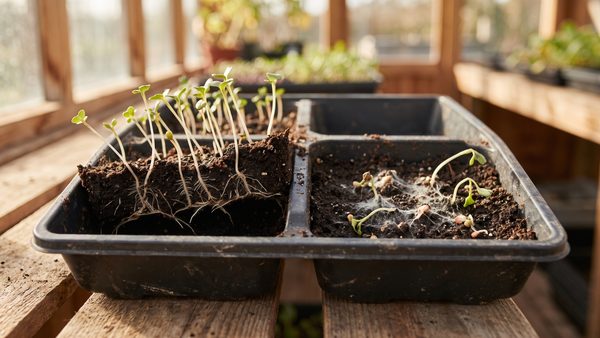
At Wilshires, we once observed damping-off in an arugula tray during a humid stretch without fan circulation. The timing made us pay closer attention to airflow, but it didn’t prove the missing fan was the only cause. Crop susceptibility, sanitation, irrigation, temperature, density, and pathogen presence can all affect the result.
Air Movement Helps, but It Doesn’t Remove Every Source of Moisture
UMass Extension’s general greenhouse guidance explains that air movement can reduce temperature differences near plants. That can make localized condensation less likely. It also notes that humidity is often highest inside a plant canopy, where transpired moisture can collect when air movement is limited.
Circulation and ventilation do different jobs. A circulation fan mixes air already inside. Ventilation replaces greenhouse air. If outdoor dew point is high, venting may offer less drying help than it would in a dry climate. Compare indoor and outdoor temperature and moisture readings instead of assuming that open vents will always lower the moisture load.
Aim for even canopy mixing rather than a direct blast. UMass guidance on horizontal airflow cautions that plants directly in an air stream can dry quickly. Checking both the driest and wettest rack positions can show whether air is moving evenly.
Water on floors and growing surfaces matters too. Puddles, wet media, damp plant surfaces, and transpiration all add moisture to greenhouse air. Drain standing water, remove wet debris, and don’t expect circulation fans to make up for continued evaporation across the growing area.
Adjust Watering, Cleaning, and Harvest Handling
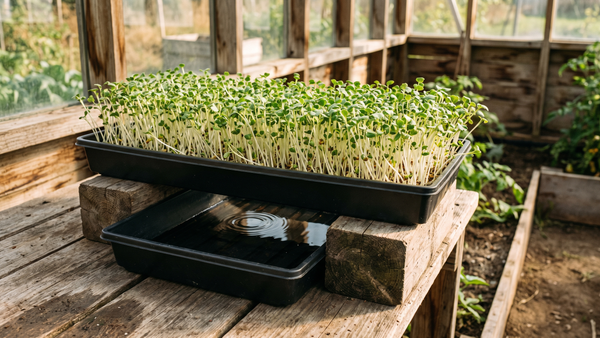
Penn State’s microgreen guidance says sub-irrigation can help keep leaves and stems dry. Bottom watering may reduce one contributor to disease risk, but it does not prevent damping-off. Use it where the crop and tray system allow, then adjust the amount and timing for the crop, medium, stage, and actual tray conditions.
Watering earlier gives incidental surface moisture more time to clear before evening temperatures fall. Overhead irrigation deserves extra care because water contacts the edible portion of the crop. Keep excess water off the floor and look beyond the tray when tracking where humidity is coming from.
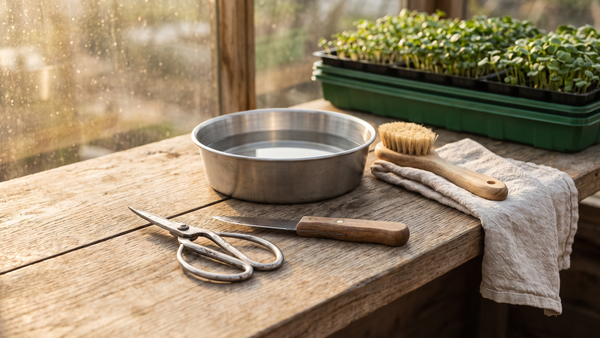
Sanitation supports moisture management, but it starts with cleaning. Penn State’s microgreen food-safety guidance says visible soil and organic residue should be removed before an appropriate sanitizer is applied. Use labeled products as directed for the surface and application. A written cleaning schedule can follow crop turnover, inspection findings, and contamination risk rather than one calendar rule for every setup.
Moisture still matters after harvest. Packing greens with free surface water or moving them through avoidable temperature changes can encourage condensation. Cool promptly and check handling by crop and package instead of promising one shelf life for every microgreen. “Dry” here means controlling free surface moisture, not leaving the crop unprotected from water loss.
A simple crop log can make these decisions clearer. Record irrigation, media, canopy temperature and relative humidity, dew point, condensation, fan and vent status, harvest surface dryness, cooling, and packaging. Over time, that gives you local evidence instead of a borrowed humidity rule.
Final Thoughts from Wilshires Organics
Florida humidity narrows the margin for error, but the response is practical. Read temperature and relative humidity together. Watch for condensation. Keep canopy air moving without blasting trays. Manage irrigation, standing water, sanitation, harvest moisture, and cooling as one connected process.
No single tool handles all of that. A fan can mix air, but it doesn’t remove every moisture source or prevent disease. The better approach is to observe each crop, make one careful adjustment, and keep a record of what changed.
Want fresh-cut microgreens this week? We harvest to order in Ocala and have them ready for pickup. See what's available and reserve your tray.