Freshness Slips After Harvest: Simple Handling Steps That Help Protect It
Protect microgreen freshness after harvest with practical guidance on clean tools, gentle handling, prompt cooling, packaging, and home storage.

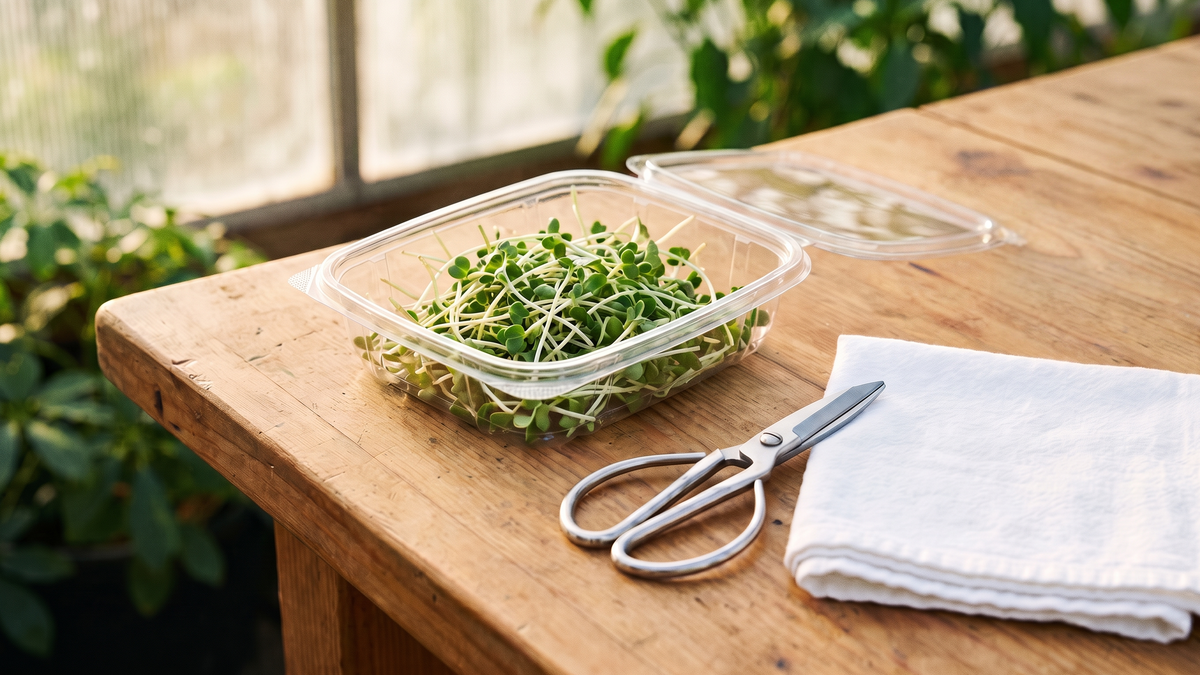
Harvest doesn't end when the greens are cut. What happens next matters too. A clean tool, a clean container, careful handling, prompt cooling, and a suitable package all play a part in protecting quality.
That sounds simple, but the details can get mixed together. Household advice gets treated like a farm process. One study gets turned into a rule for every crop. A refrigerator number gets presented as the perfect quality setting for every microgreen. None of that helps a grower or a customer make better decisions.
A more useful approach is to follow a practical sequence. Start clean. Limit needless damage. Move the harvest into controlled refrigeration promptly. Manage moisture, cooling, and packaging together. These aren't universal instructions for every microgreen or every operation. They're a sensible framework drawn from general produce guidance and limited crop-specific research.
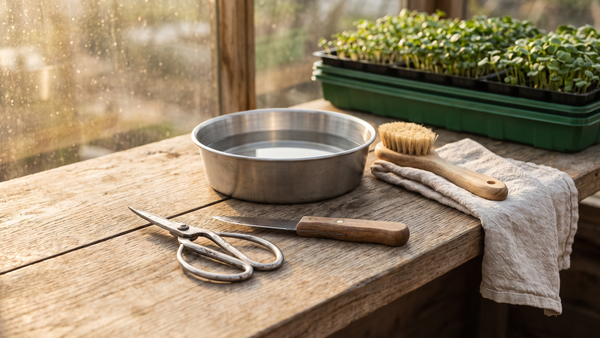
Penn State Extension's general produce guidance calls for clean and sanitized harvest tools, knives, and containers. It also recommends sanitary picking, keeping dirt off produce, discarding damaged produce, avoiding overfilled containers, and limiting bumping or scraping during hauling.
For microgreens, the gentle-handling part should stay at the principle level. Don't crush the harvest. Don't scrape it around or pack so much into a container that the greens underneath take the pressure. Avoid unnecessary impacts and extra transfers.
Our Harvest Day Checklist calls for “Wash hands / gloves ready,” “Clean and sanitize tools/surfaces,” “Clean harvest containers ready,” and “Place in clean carry container.” It also calls for tools and surfaces to be cleaned and sanitized after harvest work. Those reminders keep the focus on preparation and clean food-contact equipment.
The point is straightforward. Clean equipment and clean food-contact containers give the harvest a better starting place. Gentle handling helps limit damage that can work against quality.
Cool Promptly, Then Manage the Package and Moisture Together
Penn State's general produce guidance recommends minimizing the delay between harvest and cooling. It also explains that temperature, humidity, air movement, protective packaging, venting, and stacking can affect water loss and cooling. Tight stacking or inadequate venting can slow cooling. Condensation on colder produce can support decay.
Microgreens don't have one universal storage setting or one package that's automatically best. Crop, film, fill, temperature, and moisture conditions need to be considered together. A package has to balance physical protection, moisture retention, gas exchange, cooling, and condensation risk. “Sealed” isn't a shortcut to the right answer.
In one Tartary buckwheat study, quality and shelf life declined as storage temperature increased across the temperatures the researchers tested. The same study found that washing, drying, package conditions, and temperature affected the results together. That's useful evidence for prompt, controlled cold storage in that crop and test system. It isn't a fixed shelf-life promise or a universal setting for every microgreen.
Moisture needs the same measured approach. Too much water loss can reduce quality, while wetting and condensation can create other quality problems. The goal isn't to eliminate all moisture or keep greens as wet as possible. It's to manage moisture as part of the whole storage setup.
For home handling, FDA guidance advises keeping the household refrigerator at 40°F or below. That's household refrigeration guidance, not a universal microgreen quality optimum.
FDA also advises consumers to wash hands and food-preparation surfaces, clean cutting boards, dishes, utensils, and countertops with hot soapy water after each food item, and keep raw animal foods separate from fresh produce. For fresh produce at home, it advises rinsing under running tap water.
Those home steps shouldn't be turned into instructions for a commercial microgreen wash process. Washing, drying, package conditions, and temperature can interact. A published treatment for one crop doesn't settle the right process for another crop or operation.
A simple home routine is enough: keep the refrigerator at the recommended household temperature, keep raw animal foods apart from fresh produce, use clean preparation surfaces and utensils, and follow FDA's running-water rinse advice.
Final Thoughts from Wilshires Organics
Freshness after harvest isn't protected by one trick. It comes from paying attention to the whole handling chain.
Start with clean, maintained tools and clean food-contact containers. Handle the harvest without needless crushing, scraping, overfilling, or impacts. Move it into controlled refrigeration promptly. Then consider package, cooling, and moisture together instead of treating any one setting as universal.
For home handling, follow household guidance and keep it separate from farm processes. Simple distinctions like that make the advice clearer and more useful.
Want fresh-cut microgreens this week? We harvest to order in Ocala and have them ready for pickup. See what's available and reserve your tray.