Why Choose Locally Grown Microgreens Over Grocery Store Lettuce?
USDA research shows microgreens pack up to 4x the antioxidants of mature vegetables. Here's why locally grown beats grocery store lettuce on nutrition, freshness, and flavor.

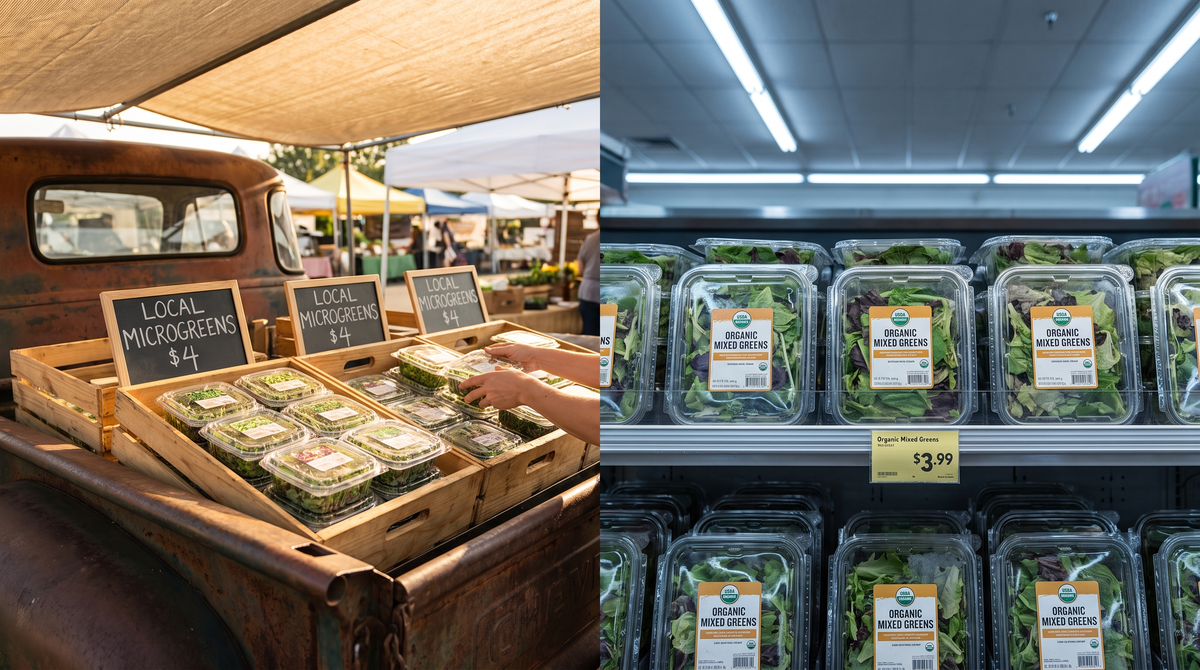
Most grocery store lettuce travels hundreds or thousands of miles before it lands in your fridge. It was picked days or weeks ago. It sat in trucks, distribution centers, and cold storage before it ever reached a shelf. That's not controversial. But most of us don't think about it in the produce aisle.
There's another option. One that grows about 20 minutes from downtown, gets harvested the day you pick it up, and carries more nutrition per ounce than its full-grown cousins. Let's walk through what actually separates locally grown microgreens from grocery store lettuce.
What's in the Bag?
Grocery store lettuce gives you bulk. A bag of romaine or spring mix fills a bowl. It's familiar and it works fine for what most people use it for.
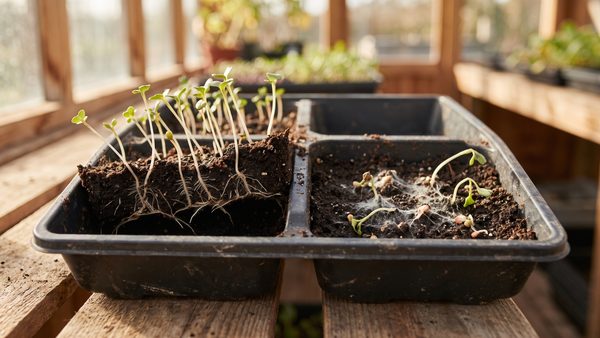
But nutritional density is a different conversation. Microgreens, harvested just 7 to 14 days after germination, are the young, tender versions of vegetables like broccoli, radish, and sunflower. And the numbers on those little plants keep surprising researchers.
A USDA Agricultural Research Service study found that broccoli microgreens contain up to four times the cancer-fighting antioxidants of mature broccoli (Yang, 2022). That finding comes from a plant physiologist at the USDA's Food Quality Laboratory, not a food blogger.
Another study, published in Frontiers in Nutrition, analyzed eight essential minerals across broccoli microgreens and mature broccoli. The microgreens averaged 1.73 times the mineral content. They were higher in magnesium, manganese, copper, and zinc regardless of how they were grown (Weber, 2017).
What the research does not say: that microgreens are a replacement for all vegetables. What it does suggest: ounce for ounce, you're getting substantially more from a handful of microgreens than a handful of mature lettuce.
The Clock Starts at Harvest
Fresh produce starts losing nutrients the moment it's cut. That's not debated. What makes it matter is how long the clock runs before the food reaches you.
Grocery lettuce typically spends 7 to 14 days moving through harvest, processing, shipping, distribution, and stocking. Then it sits in your fridge. That timeline is built into the industry model.
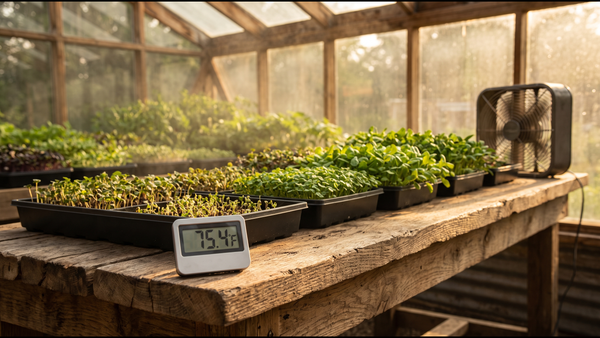
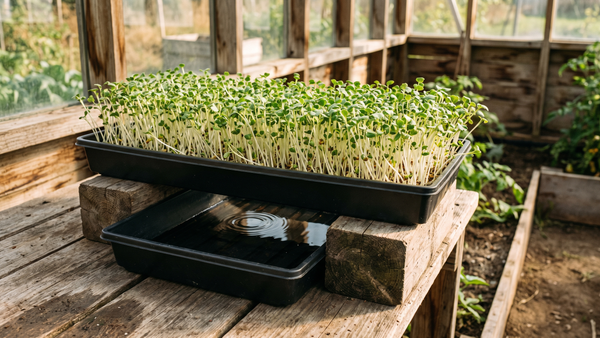
Microgreens from a local farm follow a different clock. At Wilshires Organics, harvest happens the day before pickup or the morning of. You're eating greens that were still growing yesterday.
We don't have a neat peer-reviewed study that quantifies exactly how much nutrient loss happens in grocery store lettuce during that week or two in transit. The research leans in an obvious direction, but we'll be honest: the claim that local microgreens are more nutritious because they're fresher rests partly on common sense, not a specific University study with a stopwatch.
What is peer-reviewed: the environmental cost of the long supply chain. The same Frontiers in Nutrition study noted that locally grown microgreens eliminate the need for "energy-demanding transport from farm to table" (Weber, 2017). That's not just a feel-good benefit. It's a measurable difference.
Flavor You Can't Ship
Greens that sit in plastic lose something. The bright edge goes flat. Lettuce shipped across the country gets bred for durability during transport, not for flavor on the plate.
Microgreens grown locally don't have to survive a week in a truck. They can be delicate. A fresh-cut radish microgreen has a peppery heat that fades within days. A pea shoot tastes sweet and crisp right after harvest. That's not marketing language. It's what the plant actually tastes like before storage changes it.
Grocery stores carry what survives shipping. Local farms grow what tastes good.
What About Cost?
Let's be real. A bag of grocery store romaine costs less per ounce than a tray of fresh microgreens. No argument.
But the comparison shifts when you look at what you're actually paying for. A three-dollar bag of romaine gives you mostly water weight and fiber. Microgreens are nutrient-dense enough that a small handful on a sandwich or mixed into a salad changes the nutritional value of the meal.
You're also paying for a supply chain without the middlemen. Local microgreens skip the processor, the distributor, the regional warehouse, and the grocery markup. More of what you pay goes to the person who seeded the tray.
Freshness You Can Trust
When you pick up lettuce from a grocery store, you don't know when it was harvested. You're reading a sell-by date, not a harvest date. Those are different things.
With locally grown microgreens, there's no guessing. If you pick up on Saturday, the greens were cut Friday night or Saturday morning. You can see the farm. You can ask the grower. The supply chain is transparent because it's short enough to see from end to end.
Final Thoughts from Wilshires Organics
Locally grown microgreens aren't trying to replace your grocery store lettuce. They do a different job.
They deliver more nutrition per bite. They taste like what they actually are. They skip the long supply chain that drains flavor and compounds environmental cost. And they support a local grower instead of a logistics company.
The research is strong on the nutrition front. On freshness and flavor, the logic follows the science even where specific studies haven't been run. We're comfortable being honest about that.
You don't have to pick one or the other forever. But if you're looking for something fresher, more flavorful, and more nutrient-dense than anything sitting on a grocery shelf, the answer might be growing right down the road.
Want fresh-cut microgreens this week? We harvest to order in Ocala and have them ready for pickup. See what's available and reserve your tray.