Not Every Microgreen Seed Needs Soaking: How to Choose the Right Starting Method
Learn why some microgreen seeds benefit from soaking, why most don't need it, and how crop directions, moisture, drainage, and air guide the choice.

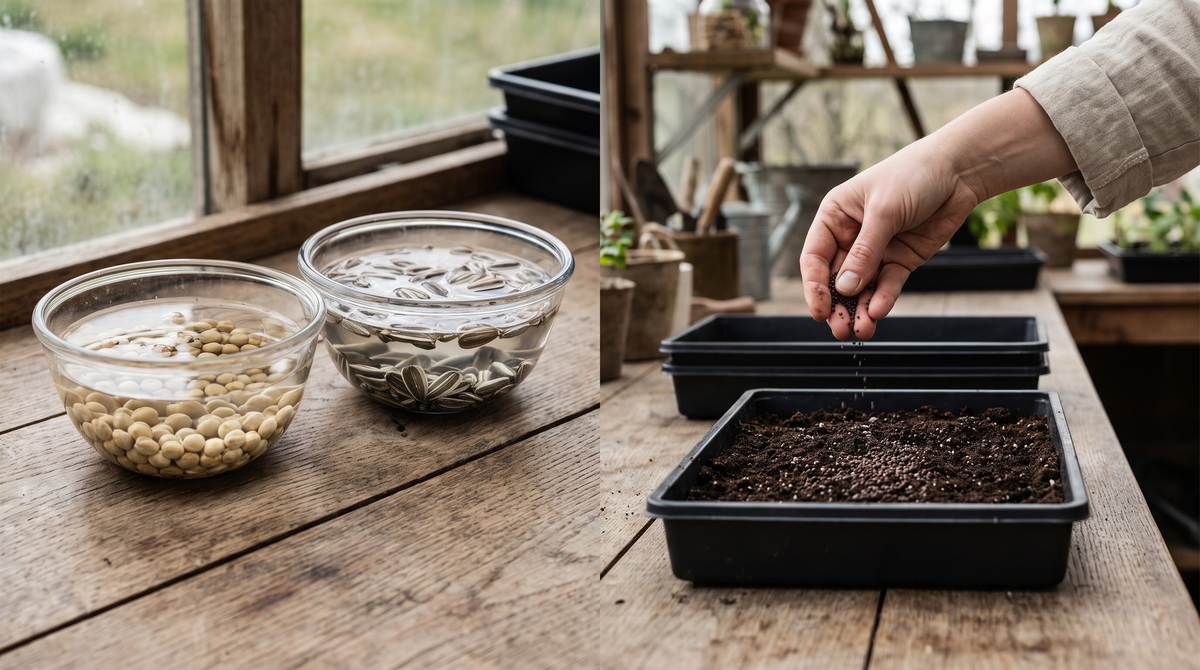
Most microgreen seeds don't need to be soaked before sowing. Some larger or hard-coated seeds may benefit from it, but soaking isn't one rule for every crop. The right choice starts with the exact crop or variety and its current growing instructions.
The reason is basic seed biology. Germination begins with imbibition, the stage when a seed takes up water and its coat swells and softens. A pre-soak can give a suitable seed a head start on that water uptake. Penn State Extension says some larger or hard-shell microgreen species may germinate faster after pre-soaking.
That doesn't make seed size a complete decision rule. Seed coats, germination requirements, moisture needs, temperature, air, and sometimes light all vary by crop. Think of size and coat as clues that tell you to check the instructions, not as the final answer.
Named Examples Show Why Crop Instructions Matter
Penn State's home microgreen method gives two clear soak examples. It calls for soaking pea seed for about 10 hours and sunflower seed for about 10 hours. Those times belong to those two examples. They aren't a standard duration for other microgreens.
The same Penn State method shows mustard being sown directly. That's one useful direct-sow example, not a rule covering every mustard variety. The comparison makes the main point: pretreatment depends on the crop.
Commercial guidance can help fill in the practical details. Johnny's Selected Seeds gives a brassica-style baseline of broadcasting seed onto the growing medium, pressing it for contact, and covering it lightly. Johnny's also tells growers to follow the germination guidance for the specific variety. That's supplier guidance, and it should stay tied to the crop directions rather than being treated as one answer for every seed.
Seed size also affects sowing density and contact with the medium. Penn State notes that sowing rates vary by seed size. Johnny's commercial production guide says larger seed may need firm pressing and enough cover to maintain contact and moisture. Soaking is only one part of the setup. How the seed sits on the medium matters too.
Water Starts Germination, but Seeds Still Need Air
A germinating seed needs water, but it also respires. It takes in oxygen and releases carbon dioxide. Penn State warns that overwatering or compacted growing medium can restrict gas exchange. That means more water isn't always better.
If a crop instruction calls for soaking, treat it as an early hydration step. Penn State's pea and sunflower method includes rinsing the soaked seed in running water for washing and oxygen. After a crop-specific soak, a practical approach is to drain the seed promptly, sow it, and keep the medium evenly moist rather than saturated.
Drainage matters from the start. Penn State recommends trays with drainage holes and says excess water should drain from wetted growing medium before sowing. Johnny's commercial guide also recommends consistent moisture while warning against saturated media, which can contribute to disease. Airflow and sowing density matter because crowded seed can reduce air circulation.
Food safety is a separate issue from germination performance. The FDA says washing produce can reduce bacteria but does not eliminate it. Keep that exact limit in mind when following any water or rinsing step.
A Simple Way to Make the Soak Decision
Start with current instructions for the exact crop or variety. If those directions call for a soak, follow the named duration and handling steps. Don't borrow a time from peas or sunflowers for a different crop.
Next, check the whole growing setup:
- Does the crop or supplier instruction call for pretreatment?
- Is the seed making good contact with the growing medium?
- Can excess water drain freely?
- Is the medium moist without staying saturated?
- Does the tray have enough air circulation?
For gel-forming seed, use current crop-specific supplier directions instead of applying one general soaking rule. The exact variety instructions should decide the method.
It can also help to keep a simple record for each crop and seed lot. Note the supplier directions, the soak decision, the authorized duration when one is given, drainage steps, and germination results. Johnny's commercial guide recommends variety trials and detailed records because crops and growing conditions differ. This is a practical way to build a repeatable process without turning one crop's method into everybody's method.
Final Thoughts from Wilshires Organics
Most microgreen seed can go straight to the growing medium without pretreatment. Some larger or hard-coated crops may benefit from a crop-specific soak. The difference comes down to the seed, the variety instructions, and the rest of the growing setup.
Use soaking for a clear purpose: giving an approved crop an early start on water uptake. Then protect drainage, even moisture, seed-to-medium contact, and air. When the crop directions are specific, the decision gets much simpler.
References
- A Step-By-Step Guide for Growing Microgreens at Home
- Seed and Seedling Biology
- Growing Microgreens
- Microgreens Production
- Microgreens Key Growing Information
- Selecting and Serving Produce Safely
Want fresh-cut microgreens this week? We harvest to order in Ocala and have them ready for pickup. See what's available and reserve your tray.