Nutrient Density, Explained: What's Actually Inside Your Microgreens
Microgreens pack concentrated vitamins and antioxidants. Here's what research shows about nutrient density, minerals, and growing conditions.

People throw around "nutrient-dense" like it means the same thing every time. It doesn't. The USDA has a specific definition. Food scientists have scoring models. The everyday use is looser.
When we say microgreens are nutrient-dense, we mean they pack concentrated vitamins, antioxidants, and phytochemicals into a small serving. That's well-supported. But it's worth understanding where the evidence is strong and where it's still thin.
What Does "Nutrient Dense" Actually Mean?
The Dietary Guidelines for Americans (2020-2025) defines nutrient-dense foods as foods that provide vitamins, minerals, and other health-promoting components, with little added sugars, saturated fat, and sodium.
Food scientists use formal profiling models like the Nutrient Rich Food index, which scores foods by beneficial nutrients relative to nutrients to limit. Nobody has applied that model to microgreens in published research. We can say they're nutrient-dense in the practical sense. We can't claim they meet a formal threshold.
In the research, "nutrient density" means the concentration of vitamins, minerals, and bioactive compounds per unit of fresh weight, compared between microgreen and mature tissues of the same species. The 2012 USDA study by Xiao et al. found microgreen leaves "possessed higher nutritional densities" compared to USDA database values for mature vegetables (PMID 22812633).
Vitamins and Antioxidants: Where Microgreens Shine
That 2012 study analyzed 25 microgreen varieties. Vitamin C ranged up to 147 mg per 100 g. Vitamin E ranged up to 87.4 mg per 100 g. Wide ranges across varieties.
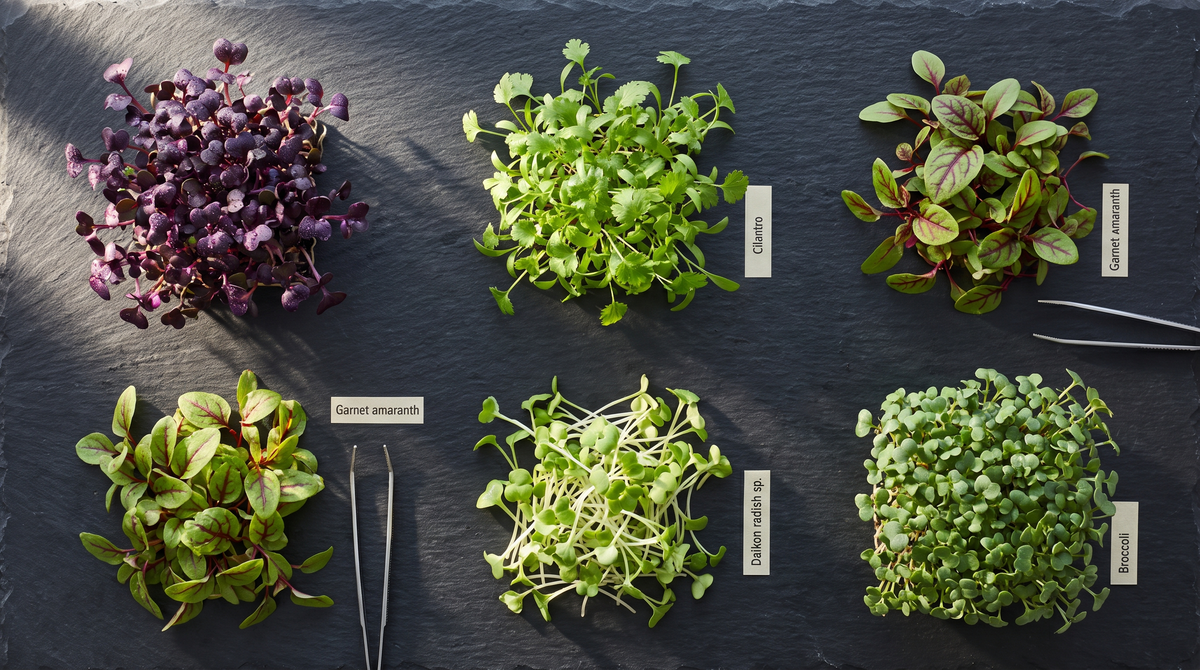
The standouts: red cabbage had the highest vitamin C. Cilantro led in carotenoids. Garnet amaranth had the most vitamin K. Green daikon radish topped vitamin E (PMID 22812633).
A 2021 Colorado State study analyzed 6 species. They detected 3,321 compounds and 26 minerals. Several were significantly higher in microgreens. But some were not different, or were lower. The advantage isn't universal (PMID 33644632).
You've probably seen the claim that microgreens have "40 times more nutrients" than mature vegetables. That comes from comparing specific vitamins in specific varieties to USDA database values. Red cabbage microgreens showed vitamin E levels often cited as up to 40 times higher. But this applies to specific vitamins in specific varieties, not all nutrients in all microgreens.
Minerals: The Picture Is Mixed
A 2023 study comparing celery microgreens to mature leaves across 20 genotypes found microgreens had higher nitrogen, phosphorus, calcium, sodium, and sulfur. But mature leaves had more potassium, zinc, copper, and manganese. Iron showed no significant difference (PMID 36447002).
If you're eating microgreens for calcium, good. If you're counting on them for potassium or zinc, mature vegetables may give you more. For vitamins and antioxidants, microgreens usually lead. For minerals, it depends on which mineral and which plant.
Phytochemicals: What the Evidence Shows
Microgreens contain polyphenols, flavonoids, anthocyanins, and glucosinolates. These are compounds studied by researchers for their health-supporting properties, including antioxidant and anti-inflammatory effects. A 2026 review identified these as key contributors to the antioxidant profile of herb microgreens (PMID 40442992).
The evidence has limits. Broccoli microgreen bioactivities have been demonstrated in in vitro and in vivo laboratory studies. These are lab findings, not human clinical trials. A 2016 USDA study found red cabbage microgreen supplementation affected weight gain and LDL cholesterol in a mouse model (PMID 27933986). That's preliminary work in mice. No human clinical trials on microgreens have been published as of July 2026.
Growing Conditions Change Everything
This is some of the most practical research out there.
Light matters. Supplemental orange LED light increased iron, magnesium, and calcium in kohlrabi, broccoli, and mizuna microgreens (PMID 31798616). A 2026 study found high light intensity with reduced nutrients drove phenolic content up about 97% in basil microgreens. But low light with elevated nutrients maximized biomass. You optimize for nutrient concentration or yield. Not both (PMID 41754251).
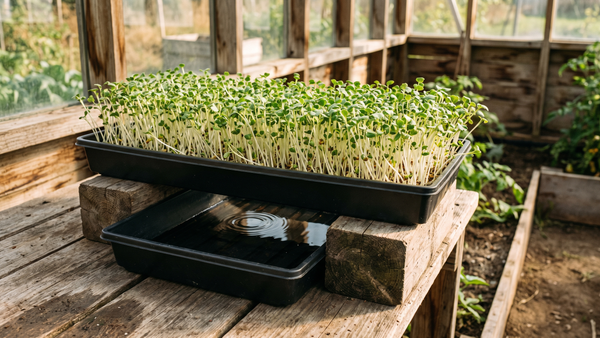
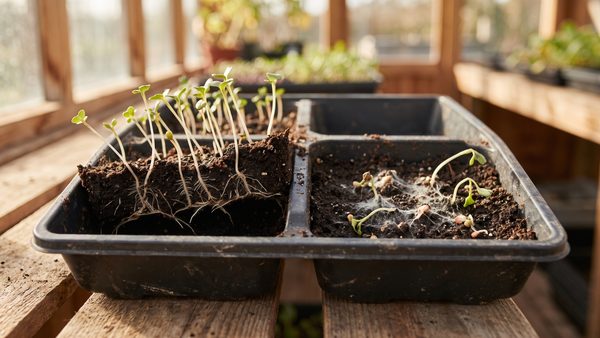
Growing medium matters. A Penn State study found a peat and compost mix matched or beat standard peat-perlite for nutritional quality (PMID 37469787). A UAE study showed microgreens grown in desert sand outperformed rockwool in antioxidants and ascorbic acid (PMID 41114147).
Harvest timing matters. A 2021 study on choy sum found most essential minerals concentrated at the microgreen stage, but some carotenoids peaked later. Nutrients shift through development (PMID 33892360).
Once harvested, microgreens lose nutrients quickly. A USDA review notes they "easily dehydrate, wilt, decay and rapidly lose certain nutrients." Freshly harvested microgreens likely retain more than stored ones (PMID 32144769).
What We Still Don't Know
No human clinical trials on microgreens and health outcomes. No formal nutrient profiling applied to microgreens. Bioavailability research is thin. A 2026 review notes mineral bioavailability from microgreens "has not been sufficiently researched" (PMID 42280162). No pediatric studies exist.
Nutrient density tells us what's in the food. It doesn't automatically tell us what our bodies absorb. The research is promising but early.
Practical Takeaways
Eat both microgreens and mature vegetables. They have different strengths. Microgreens excel in vitamins and antioxidants. Mature plants provide more of certain minerals, plus fiber and volume.
Variety choice matters as much as the microgreen-vs-mature question. Red cabbage, cilantro, and green daikon radish have the strongest research backing for vitamin concentration.
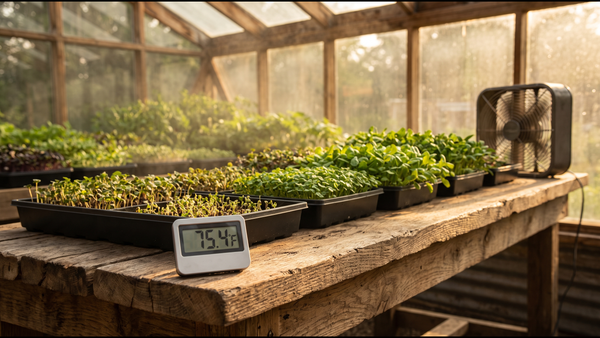
Growing conditions affect what ends up in your tray. Light, growing medium, and harvest timing all matter. And freshness counts. The sooner you eat them after harvest, the more nutrients they likely retain.
Microgreens are what researchers call a "functional food." Not a superfood. Not a replacement for vegetables. A complementary food that concentrates vitamins and antioxidants into a small package.
Final Thoughts from Wilshires Organics
We grow microgreens because the research backs them as a concentrated source of vitamins and antioxidant compounds. We also grow them because they're fresh, local, and taste good. The science is still developing. We'll keep tracking it and sharing what we find, without overstating what the evidence shows. Questions about specific varieties? Check the harvest days order page or come by the farm stand.
Want fresh-cut microgreens this week? We harvest to order in Ocala and have them ready for pickup. See what's available and reserve your tray.