Waiting Weeks for Fresh Greens? Radish Microgreens Are Ready in 7 Days
Radish microgreens grow in just 7-10 days with a bold, spicy kick. Learn why Wilshires Organics relies on Rambo Purple Radish for speed, flavor, and nutrition.

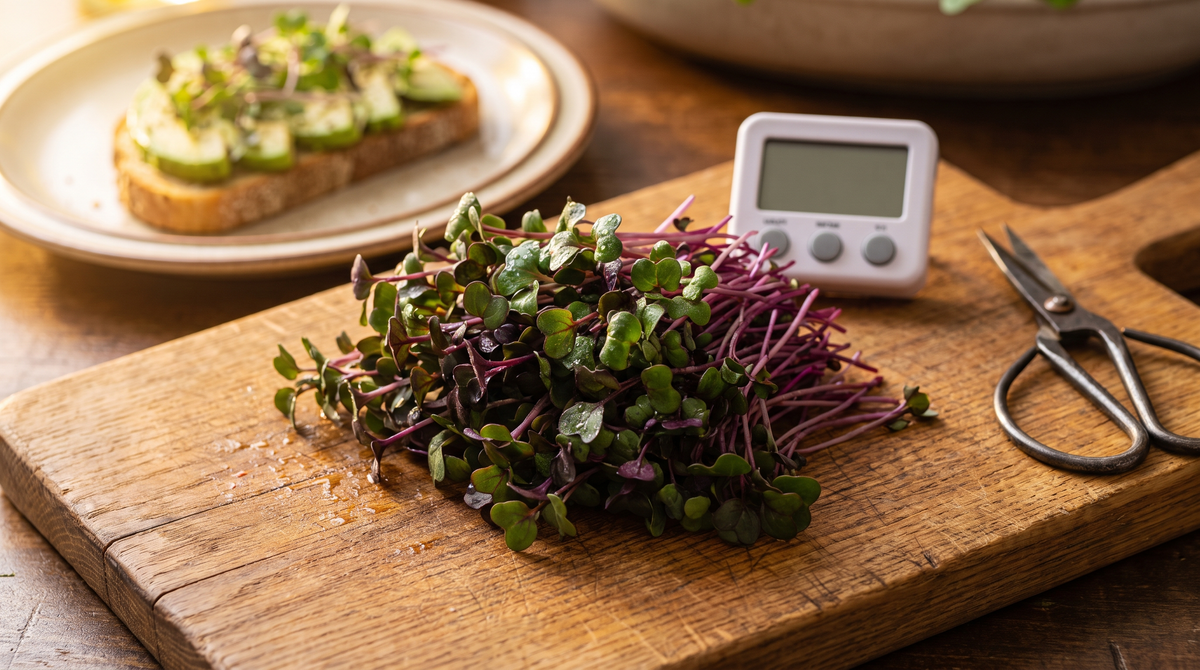
Most people hear "grow your own greens" and think about waiting. Weeks of watering, hoping, and checking the soil. That's fine if you've got the time. Most of us don't.
Radish microgreens don't ask for patience. They're among the fastest microgreens you can grow, ready to harvest in 7 to 10 days from seed. At Wilshires Organics, we grow Rambo Purple Radish, a variety that brings speed and a peppery, horseradish-like kick to whatever it touches. If you've been avoiding microgreens because they seemed fussy or slow, radish is where you start.
What Makes Radish So Fast?
Microgreens as a group are quick. Penn State Extension puts the general window at 7 to 21 days from seeding to harvest, depending on the type. Radish sits at the short end of that range. It germinates fast and opens its cotyledons in short order. You're not nursing it along.
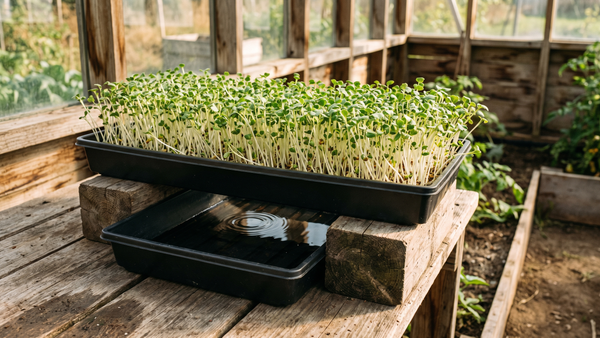
Part of what helps is the seed itself. Brassica seeds like radish run about 11 to 12 grams per tablespoon, and you broadcast them thick across the tray. Johnny's Selected Seeds recommends 6 to 8 large seeds or 10 to 12 small seeds per square inch. Dense planting means a full canopy in days, not weeks.
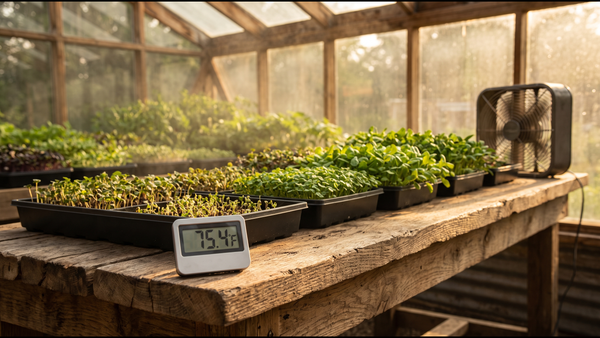
Radish also doesn't demand much. Microgreens are a low-light crop. They don't need fertilizer in most cases because the growing window is so short. Penn State Extension suggests 50 to 100 ppm nitrogen only if you're pushing for extra growth. Soil temps between 60 and 75°F do the job. It's a forgiving plant for a grower who wants results without fussing.
Where That Spicy Kick Comes From
If you've eaten a radish microgreen, you know the flavor. It's not subtle. It hits like horseradish or wasabi, sharp and quick, then fades. That heat comes from a family of compounds called isothiocyanates.
Isothiocyanates form when you chew or cut the plant. The cells break open, an enzyme goes to work on compounds called glucosinolates, and the result is that sharp, peppery punch. It's the same chemistry that gives mustard and horseradish their heat. A 2024 study published in Food Research International tested 14 different Brassica microgreens and found radish and broccoli tied for the highest isothiocyanate levels. Among radish varieties specifically, Red Rambo (closely related to the Rambo Purple we grow) showed isothiocyanate levels of 1.3 to 5.2 mg per 100 grams in a 2025 study.
Researchers have identified 51 different volatile compounds across four radish microgreen cultivars. Isothiocyanates, sulfides, terpenes, and others all contribute. But the isothiocyanates are the main event. They're what make you notice radish microgreens on the plate.
What's Actually In These Little Plants
You hear "nutrient-dense" a lot. With radish microgreens, there's published research behind it.
A USDA-funded study in 2012 tested 25 microgreen varieties and found green daikon radish had the highest vitamin E concentrations of all of them. Across the full set, vitamin E ranged from roughly 5 to 87 mg per 100 grams fresh weight. That same study found microgreen cotyledon leaves generally pack higher nutritional densities than their mature counterparts, based on USDA nutrient database comparisons.
For vitamin C, a 2019 study in the journal Foods found radish microgreens provide 31 to 56 mg per 100 grams fresh weight. By comparison, the USDA lists mature radish root at about 14.8 mg of vitamin C per 100 grams. So radish microgreens may deliver 2 to 4 times more vitamin C, gram for gram, than the full-grown root. That same 2019 study found radish and mustard microgreens had the highest bioaccessibility of minerals and bioactive compounds after simulated digestion, outranking broccoli, kale, and red mustard.
Radish microgreens also contain carotenoids, polyphenols, and glucosinolates. And those isothiocyanates we talked about? They're compounds studied by researchers for their health-supporting properties.
Final Thoughts from Wilshires Organics
Radish microgreens earn their spot in our lineup for one reason: they deliver. Speed, flavor, and substance in a plant that doesn't need coddling.
We grow Rambo Purple Radish every week and sell it for $3.50 an ounce alongside our other varieties. It's one of our steadiest sellers, and for good reason. Toss it on tacos, mix it into a salad, or lay it across a sandwich. It wakes up whatever it touches.
If you want greens that grow fast and taste like something, radish microgreens belong in your rotation.
Want fresh-cut microgreens this week? We harvest to order in Ocala and have them ready for pickup. See what's available and reserve your tray.