Worried About Fuzz on Your Microgreens? Use This Three-Part Check for Root Hairs or Mold
Root hairs or mold on microgreens? Use attachment, water response, and seedling condition to check a tray and decide on a cautious next step.

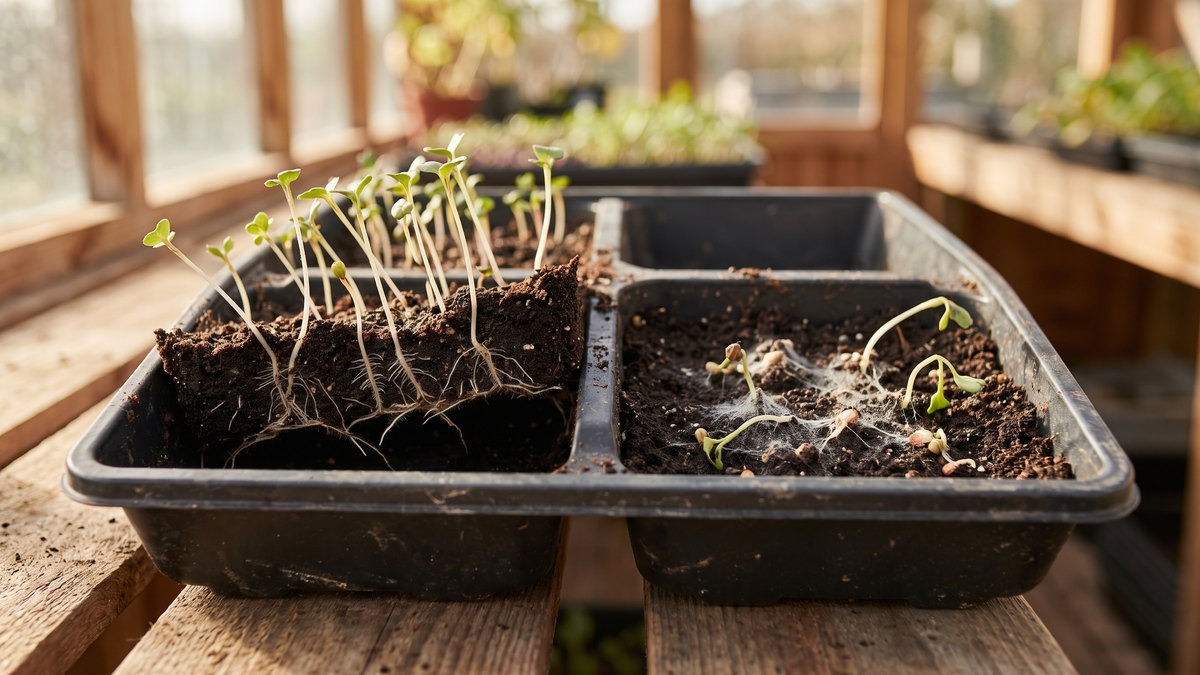
A patch of fuzz on a new tray can make you wonder whether the seedlings are growing normally or the tray has a problem. Don't decide from one glance. Check where the growth is attached, how it responds to direct wetting, and whether the seedlings show signs of damage.
Root hairs are normal parts of a young plant. They form on roots and help the seedling take up water and mineral nutrients. That basic fact gives you the first and strongest clue: root hairs belong on roots. The University of Arizona Cooperative Extension explains their role in plant development.
Fine growth repeated along individual roots is more consistent with root hairs. Growth that crosses the growing medium, seed hulls, stems, or leaves strengthens suspicion of a problem. It may also bridge more than one seedling instead of following the roots. That pattern matters more than a quick impression of the tray.
That's why attachment matters more than the fact that the growth looks fuzzy. The useful question is whether it follows young roots in a repeated pattern or extends across parts of the tray where root hairs don't belong.
Use Three Clues Together
Start with attachment and distribution. Look closely at several seedlings, not just one spot. Is the fuzz attached to individual roots near the root line? Or does it form irregular webbing across the medium and other plant parts? The first pattern is more consistent with root hairs. The second deserves a closer check.
Next, directly wet a small area. Experienced grower guides from Bootstrap Farmer and Quantum Microgreens note that root-hair fuzz may flatten and become much harder to see when wet. Web-like growth that stays visible after wetting can strengthen suspicion of mold. Water is only one observation clue, so keep it beside the attachment and plant-condition checks. Wetting changes how root hairs look. It doesn't settle the identity of unknown growth by itself.
Then inspect the seedlings. University of Minnesota Extension lists soft or mushy tissue, thinned stems, wilting, poor emergence, collapse, stunted roots, and sunken root spots among signs associated with damping-off. Irregular webbing paired with declining tissue is more concerning than fine hairs on roots with firm seedlings.
If the clues don't line up clearly, don't taste the crop to make a decision. At Wilshires Organics, our conservative policy is to isolate a suspect tray, discard it, and restart rather than advise someone to salvage an uncertain raw crop. It's a cautious risk-management choice we apply consistently.
Reduce the Conditions That Support Problems
Good prevention isn't one trick. It's a routine built around clean equipment, drainage, measured watering, air circulation, and a seeding rate suited to the crop.
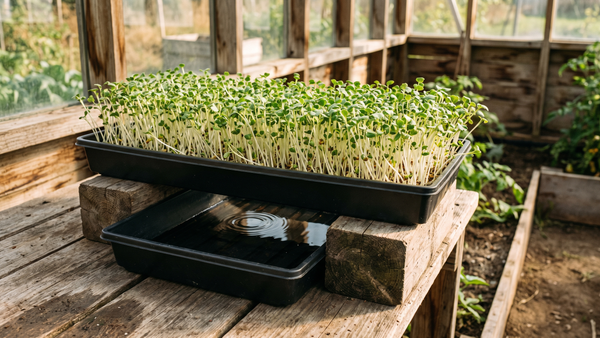
Start with clean trays and tools and clean, new growing medium. Use trays and media that drain, and keep the medium moist rather than soggy. Penn State Extension recommends watering only when needed, allowing drainage, and improving air circulation to avoid excess moisture. Bottom watering can also limit water contact with the greens when used appropriately after the seedlings are established.
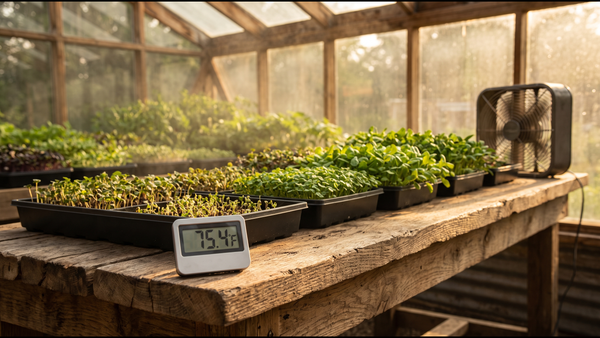
Air movement should help prevent stagnant, persistently wet conditions. It shouldn't blast young seedlings. Seeding density also deserves attention, but the details depend on the crop and production system. In a controlled study of cress, rocket, and pea production systems, higher densities were associated with greater measured microbial loads, including fungi. The study doesn't turn that finding into one universal rate for every microgreen. It supports using crop-specific rates instead of packing every tray as tightly as possible. You can read the study through PubMed.
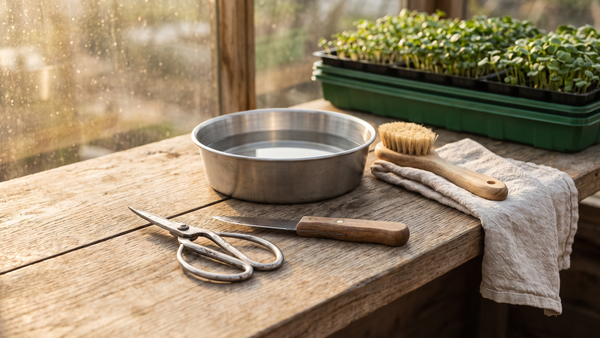
For food-contact equipment, use a sanitizer labeled for the intended use and follow its label and the requirements that apply to your operation. A repeatable routine makes it easier to catch excess moisture, weak drainage, or declining seedlings before the problem spreads.
Final Thoughts from Wilshires Organics
When you find fuzz on a tray, slow down and use all three checks. Look at where it's attached, observe what happens when a small area is directly wetted, and inspect the condition of the seedlings. Fine growth following healthy roots is more consistent with root hairs. Irregular webbing across the tray paired with tissue decline strengthens suspicion of mold or damping-off.
When the identity stays uncertain, our conservative approach is simple: isolate the tray, discard it, clean the equipment, and start again. Losing one tray is frustrating. Guessing with an uncertain crop isn't worth it.
Want fresh-cut microgreens this week? We harvest to order in Ocala and have them ready for pickup. See what's available and reserve your tray.