Cut Through the Soil vs Hydroponic Hype: What Research Actually Shows for Microgreens
Soil or hydroponic? Research shows a spectrum, not a binary. Nutrient data is thin, flavor claims rest on anecdote, food safety is about practices.

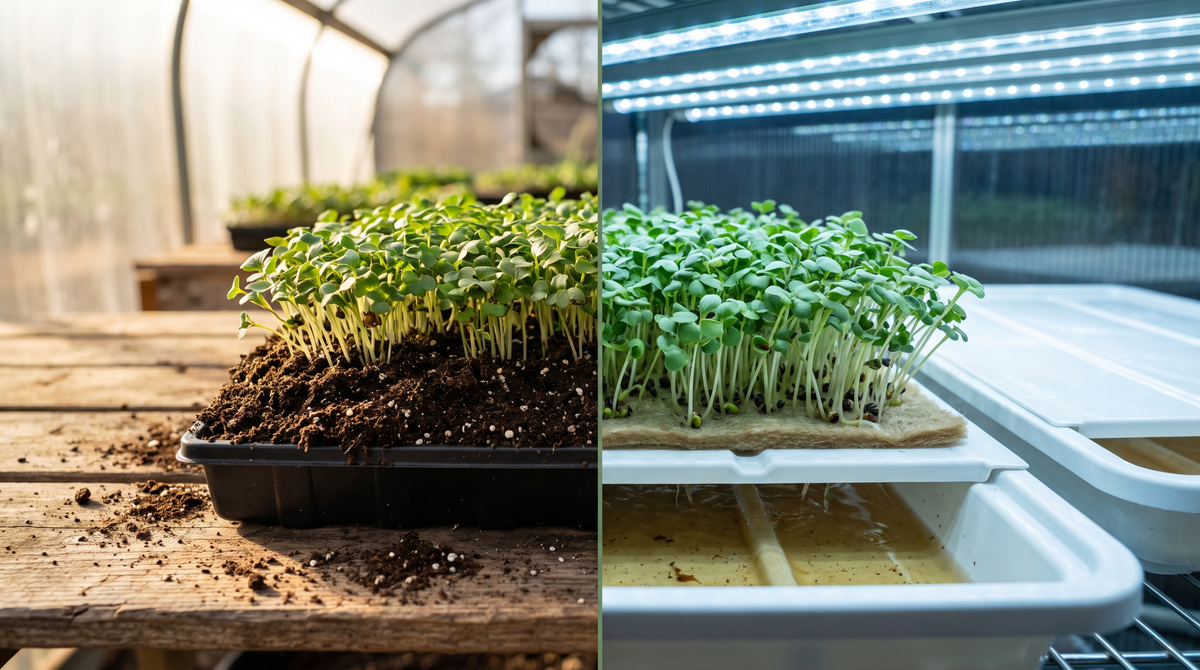
People ask us all the time whether soil-grown microgreens are better than hydroponic ones. Customers have read that soil is more nutritious. Or that hydroponic is cleaner, more efficient. Most of those claims lean on a binary that doesn't match what researchers have measured.
Here's what the peer-reviewed literature says, and where it doesn't say much at all.
It's a Spectrum, Not a Binary
Microgreens grow in a wide range of substrates. Soil and potting mix. Coco coir, peat moss, perlite, vermiculite. Hemp mats, jute mats, burlap. Rockwool. Biodegradable fiber mats. "Hydroponic" in this context usually means growing on an inert substrate (a fiber mat, rockwool, or perlite) fertigated with a nutrient solution. Not plants suspended in water.
The line between "soil" and "hydroponic" gets blurry fast. Coco coir is soilless but isn't necessarily hydroponic. Bottom-watering a soil tray isn't the same as deep water culture.
USDA's Agricultural Research Service notes that microgreens can be grown from simple home gardens to sophisticated vertical farms with automated irrigation, fertilizer delivery, and lighting controls. Minimal space and nutrient requirements make them accessible. The medium is shifting from soil toward soilless substrates in commercial settings. Both approaches are legitimate.
What the Nutrient Studies Actually Show
Direct head-to-head comparisons of soil-grown versus hydroponic microgreen nutrient content are sparse. The evidence base is thin. Here's what we do have.
A 2026 study (Ciriello et al.) compared two Brassica microgreens grown with peat substrate versus substrate-free. Peat markedly improved growth. Fresh yield increased by more than 50%. Dry yield increased by nearly 48%. Peat also enhanced organic acid metabolism. Malate increased 277%. Citrate increased 102%. Nitrate stayed low and within safe limits across all treatments.
A 2025 study (Nishanth et al.) compared six microgreen species grown in desert sand versus rockwool. Sand-grown microgreens outperformed rockwool. Longer shoots, increased root development, higher yields. Sand-grown microgreens showed higher total phenols, antioxidants, and ascorbic acid, particularly in ajwain and thyme. The researchers attributed the superior performance to sand's mineral content, especially calcium.
One review (Bhaswant 2023) cites a study claiming hydroponic systems are "more efficient" than soil. That study isn't indexed in PubMed and couldn't be independently verified. Treat that claim as untested.
The honest read: both soil and hydroponic methods produce nutritious microgreens. No study proves one method is objectively superior in nutrient content. Species, growing conditions, and handling matter more than the medium itself.
Flavor Claims Rest on Anecdote
No peer-reviewed studies compare flavor or texture between soil-grown and hydroponic microgreens. That's a genuine evidence gap.
Reviews describe microgreens generally as having concentrated flavors and tender texture, regardless of growing medium. But they don't make substrate-specific comparisons. Any claim that soil-grown tastes better, or that hydroponic tastes bland, rests on grower anecdote. Not verified research.
Some growers report differences in flavor between methods. That's worth hearing. It just hasn't been formally studied.
Food Safety Is About Practices, Not Method
Both soil and hydroponic systems carry food safety risks. Neither is inherently safer.
Pathogen survival varies by growing medium. A 2020 study (Misra and Gibson) measured Salmonella and Listeria survival over 10 days on four soil-free substrates: coco coir, peat/vermiculite mix, Biostrate, and hemp mat. Salmonella persisted on hemp and Biostrate. It declined 1 to 2 log CFU/mL in coco coir and peat. Listeria persisted on hemp and Biostrate but dropped below detection in coco coir.
Irrigation water quality is critical for soil-grown microgreens. A 2025 study (Rao et al., University of Maryland and USDA ARS) tracked pathogen transfer from contaminated irrigation water to microgreens on soil beds. Salmonella, E. coli O157:H7, and Listeria all reached edible portions.
Pathogen transfer from substrate to microgreens is a risk in soilless systems too. A 2024 study (Işık et al.) found the same three pathogens could transfer from contaminated perlite or seeds to edible portions of 20 microgreen types.
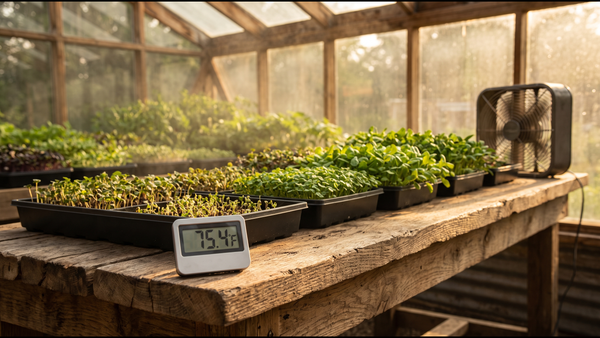
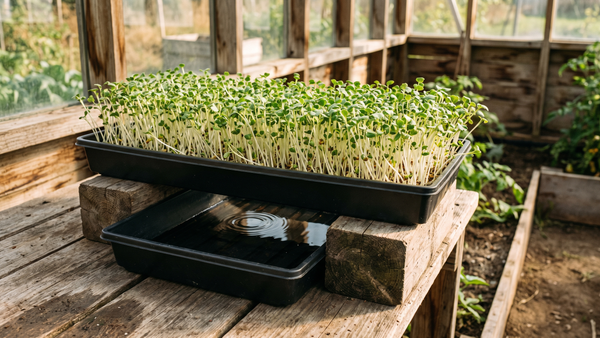
Clean water, clean seed, proper sanitation, and good handling are what matter. The medium is secondary. We bottom-water our trays to keep leaves dry and push airflow hard in Ocala humidity. Those practices align with good agricultural practices regardless of what you grow in.
Why We Grow in Soil
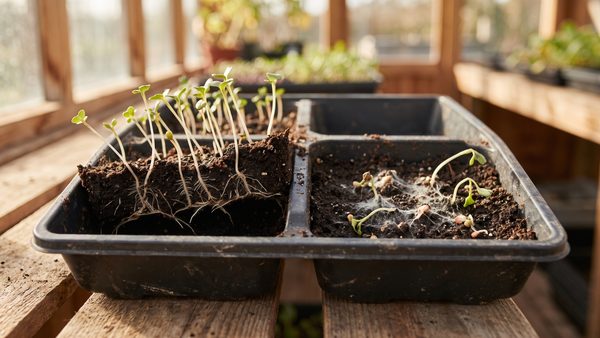
We grow in rich potting mix. That's a deliberate choice. Soil and potting mix are among the most common methods for home and small-scale growers. It's a simpler, lower-infrastructure approach than hydroponic systems that require nutrient solution management.
The research shows substrate-based growing can support robust growth and good nutritional content. That lines up with what we see in our trays. We're not claiming soil produces objectively "more nutritious" microgreens than hydroponic. The evidence doesn't support that. We're claiming it works for us, it's straightforward, and the microgreens are good.
That's brand positioning, not a scientific claim. Hydroponic systems range from home setups to commercial vertical farms. Both approaches produce real, living plants. We just prefer soil.
Final Thoughts from Wilshires Organics
The soil versus hydroponic debate is mostly a false dichotomy. Research shows a spectrum of methods, not a binary. Nutrient comparisons are thin. Flavor claims are anecdotal. Food safety depends on practices, not medium.
What we can verify: our own growing practices, the quality of our microgreens, and honest food safety habits. That's what we focus on. If you want to see what soil-grown looks like at our farm, the harvest days order page lists what's coming up. Or stop by the farm stand.
Want fresh-cut microgreens this week? We harvest to order in Ocala and have them ready for pickup. See what's available and reserve your tray.