Sprouts, Microgreens, or Baby Greens? Cut the Confusion and Pick the Right One
Sprouts, microgreens, and baby greens aren't the same. Here's how they differ in growing method, nutrition, safety, and flavor, plus why we grow microgreens.

We've covered the basics before. A November post walked through what microgreens are and why they matter. Here we go deeper, because people still mix up sprouts, microgreens, and baby greens, and the confusion isn't just naming. It changes what's on your plate and how much risk you're taking on.
The Three Stages, Side by Side
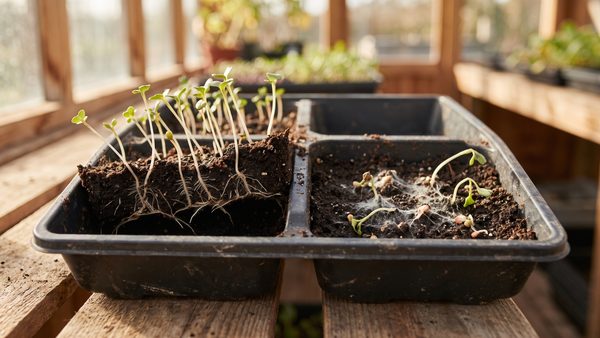
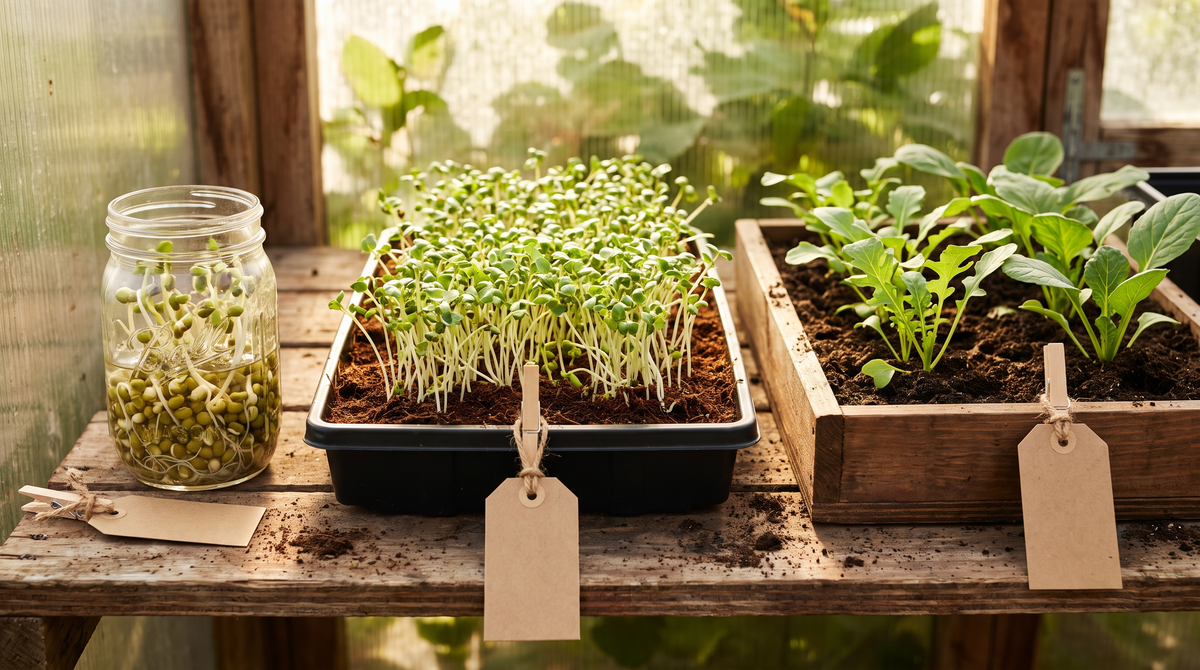
Think of the three as a progression of plant growth. Sprouts are the youngest. They're germinated seeds grown in water, no soil, no light, kept warm and humid. You eat the whole thing: root, seed, stem, and cotyledons. Harvest happens in two to five days.
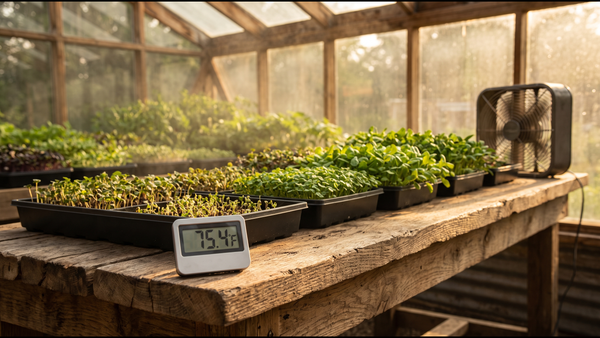
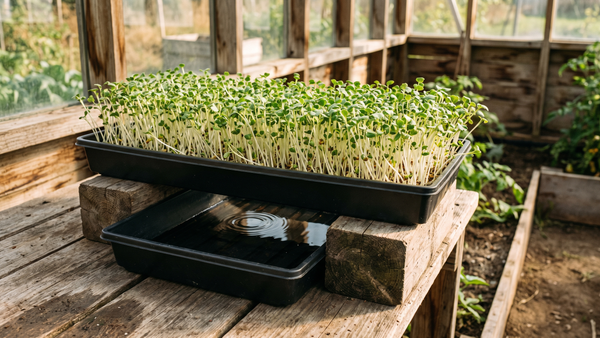
Microgreens are the middle stage. Seeds go into soil or a substrate like coco coir, under light, with airflow. They grow to the cotyledon or early true-leaf stage, then get cut above the soil line. Roots stay behind. Harvest runs seven to fourteen days.
Baby greens are the most mature. They're grown in soil in fields or greenhouses, harvested after multiple true leaves develop, usually at twenty to thirty-plus days. Think baby spinach, baby arugula, baby kale. The part you eat is the leaves and stems.
The structural distinction matters. Sprouts are consumed whole. Microgreens are cut above the roots. Baby greens are harvested as young but more developed plants. Each category offers different nutritional benefits at different concentrations. No single one is "best."
What the Nutrition Research Actually Shows
Here's where people overreach. You've probably seen the claim that microgreens have far more nutrients than mature vegetables. That figure comes from a real study, a 2012 USDA and University of Maryland paper that analyzed 25 commercially available microgreen varieties. But it doesn't mean what the headline suggests.
Certain microgreen varieties, notably red cabbage, contained significantly higher concentrations of specific vitamins, such as vitamin E and vitamin C, compared to their mature counterparts. That's the defensible version. The blanket claim doesn't hold.
Research on microgreen nutrition is species-specific. A 2026 study comparing mung bean microgreens to mung bean sprouts found the microgreens had nearly double the dietary fiber, higher levels of key minerals, and significantly more vitamin C. Those results are specific to mung beans. They may not apply to other species.
Nutritional profiles vary widely across microgreen varieties. One 2025 analysis of six varieties found vitamin C content alone varied by more than two-fold. The honest summary: each category gives you something different, at different concentrations, depending on the plant.
The Food Safety Distinction That Matters Most
For consumers, the food safety difference may be the most practically important distinction. Here's why.
Sprouts are grown in water, kept warm and humid, in the dark, with the entire plant consumed. Those conditions are ideal for bacterial growth. Between 1996 and 2014, the FDA recorded 43 outbreaks tied to sprouts, with 2,405 illnesses and 171 hospitalizations. That's why the FDA applies dedicated regulations to sprout production, including seed treatment, pathogen testing of irrigation water, and environmental monitoring for Listeria.
Sprouts carry a higher food safety risk. They're not banned. They're sold commercially under strict oversight. If you're pregnant, elderly, or immunocompromised, consult FDA or CDC guidance before eating raw sprouts.
Soil-grown microgreens harvested above the root line carry a significantly lower food safety risk profile than sprouts. A comparative study found E. coli levels on harvested microgreens were significantly lower than on sprouts grown from seeds inoculated at the same levels. But microgreens are lower risk, not zero risk. Pathogen proliferation can occur from contaminated seeds, like any raw produce.
Baby greens share the same food safety considerations as other fresh leafy greens. They're eaten raw, with no kill step. Outbreaks of E. coli, Salmonella, and Listeria have all been linked to leafy greens. Risk is managed through good agricultural practices, clean irrigation water, and proper handling.
Why We Grow Microgreens
At Wilshires, we've found microgreens to be a practical choice for our farm. They grow in seven to fourteen days, faster than baby greens. They're harvested above the soil line, which means they're classified as raw agricultural commodities under FDA rules, not as sprouts. The strict sprout regulations don't apply to what we grow.
We don't grow sprouts. The warm, water-based growing method isn't something we want to manage. Microgreens give us open-air growing with light and airflow, a different risk profile, and a product we're comfortable putting our name on.
Flavor matters too. Different microgreen varieties offer distinctly different flavor profiles. Radish and mustard tend toward peppery. Sunflower is nutty. Broccoli is mild. These pairings come from grower consensus and culinary experience, not from controlled sensory panels, but they hold up in the kitchen.
Final Thoughts from Wilshires Organics
The three categories aren't competing. They're different stages of the same plant, grown different ways, with different trade-offs. Sprouts are fastest but carry the highest food safety risk. Baby greens take the longest but produce the most volume. Microgreens sit in between, with concentrated flavor, a shorter growing cycle than baby greens, and a lower risk profile than sprouts.
If you want to try what we grow, check the harvest days order page or stop by the farm stand on Saturdays. We're happy to talk through the varieties and help you pick what fits your kitchen.
Want fresh-cut microgreens this week? We harvest to order in Ocala and have them ready for pickup. See what's available and reserve your tray.