Stop Chasing the 40-100x Headline: What Sulforaphane Research Can Actually Tell Us
Sulforaphane research is more complicated than the 40-100x headline. Learn what studies show about sprouts, microgreens, processing, and limits.

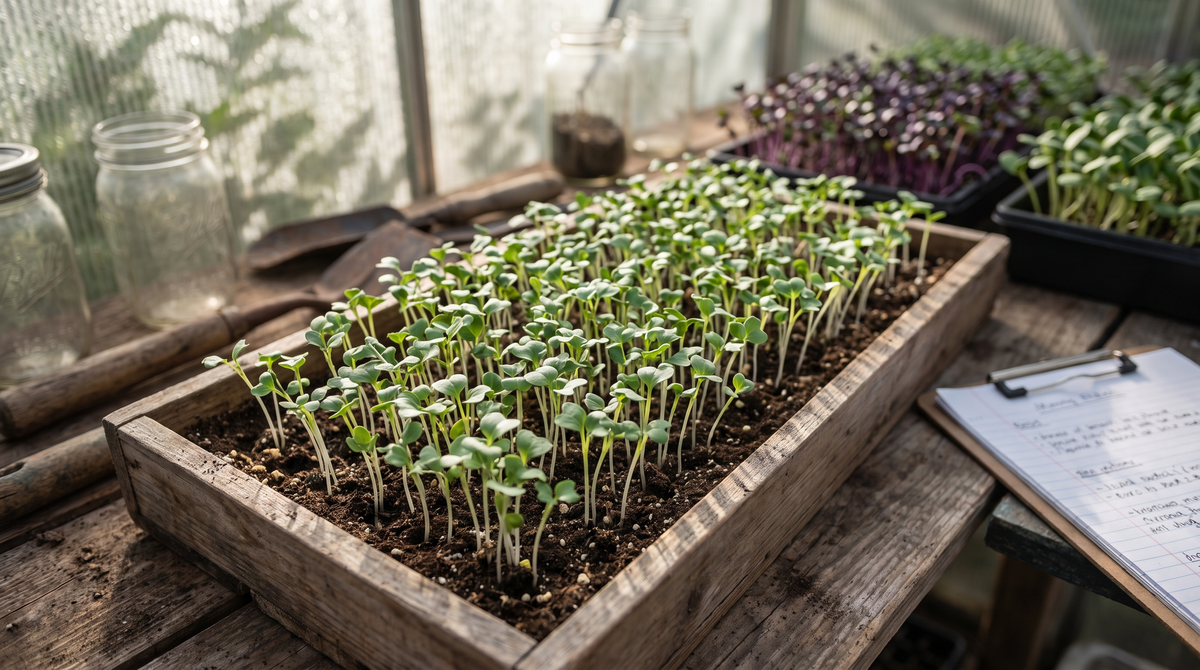
Sulforaphane gets attached to broccoli microgreens in a lot of online nutrition talk. The problem is that several different things get blended together: broccoli sprouts, microgreens, mature broccoli, extracts, and supplements. They aren't the same material, and a result from one preparation doesn't automatically describe another.
Here’s the useful part. Sulforaphane is among the compounds studied by researchers for their health-supporting properties in broccoli and other cruciferous vegetables. Broccoli plants store glucoraphanin, a glucosinolate precursor. When myrosinase acts on glucoraphanin, it can be converted to sulforaphane. Myrosinase may come from the plant tissue. Researchers also discuss microbial myrosinase as another possible conversion route.
That’s a chemistry explanation, not a personal dose prediction. It doesn't tell us exactly how much sulforaphane someone will get from a tray of microgreens.
Sprouts, microgreens, extracts, and supplements are different
The word broccoli covers more ground than many headlines admit. Sprouts are young plants grown under sprouting conditions. Microgreens are grown to a later stage and harvested as young greens. Mature broccoli is a different plant stage. Extracts and supplements are processed products with their own formulations and doses.
Research has compared these materials, but they shouldn't be treated as interchangeable. Formulation, dose, bioavailability, plant material, and processing all matter.
Two human studies show why the details belong in the headline. In one small volunteer study, broccoli sprouts or seeds with active plant myrosinase produced approximately three to four times greater sulforaphane bioavailability than glucoraphanin delivered without active plant myrosinase. That result applies to the tested human preparations. It isn't a rule for every microgreen serving.
In a separate randomized study, people consuming fresh broccoli sprouts had roughly three times higher sulforaphane-metabolite levels in plasma and urine than people consuming a myrosinase-treated broccoli-sprout extract under the study’s controlled conditions. Again, that is a comparison between specific preparations and doses. It doesn't mean broccoli microgreens deliver three times more than an extract.
What the microgreen studies actually measured
Microgreen research can tell us useful things about plant composition. One study profiled polyphenols in microgreens from five Brassica species and putatively identified 164 polyphenols using a specific laboratory method. “Putatively identified” matters. An analytical profile is not proof of a health outcome.
A 2025 study analyzed six microgreens, including broccoli, and reported measured differences among species for minerals, ascorbic acid, phenolics, flavonoids, sugars, organic acids, and volatile compounds. Those findings describe the samples tested. They aren't a guarantee for every variety, farm, harvest age, or growing system.
Growing conditions can also affect what researchers measure. In a study of cabbage and Chinese-kale microgreens, light intensity and photoperiod affected growth and measured nutritional-quality variables. The responses differed by crop and by variable, including glucosinolate content. That doesn't support saying more light always means more sulforaphane.
The same caution applies after harvest. A broccoli-sprout study examined temperature, heating time, added myrosinase, and extraction steps as factors affecting measured sulforaphane content. Heating and handling can change conversion and measured amounts, but the result depends on the preparation. The studies reviewed here don't establish one kitchen method as universally superior. “Raw is always best” is too simple, and “heat destroys sulforaphane” is too simple too.
Why the 40-100x claim needs a correction
The familiar 40-100 times figure belongs to broad broccoli-sprout literature statements. It isn't a source-safe universal claim for generic broccoli microgreens. The reviewed research supports strong interest in broccoli sprouts and variable composition across plant material and test conditions. It doesn't justify promising that every broccoli microgreen tray contains 40-100 times more sulforaphane than mature broccoli.
There is also no product-specific validated assay in the supplied Wilshires records that establishes a sulforaphane amount per ounce or per serving. So this article won't invent one. A day-12 harvest or a particular growing setup doesn't measure sulforaphane by itself.
FDA food-safety guidance about warm, humid sprouting conditions applies to sprouts generally. It should not be used to imply that a particular Wilshires product is unsafe. Follow applicable produce-handling practices, and keep food chemistry separate from food-safety claims.
Final Thoughts from Wilshires Organics
The honest takeaway is narrower than the headline and more useful. Sulforaphane research starts with glucoraphanin, myrosinase, plant material, processing, and measurement. Researchers study the compound in laboratory, animal, and human settings, but those evidence types aren't interchangeable.
Broccoli microgreens are a food ingredient. The research context is worth understanding, but it doesn't support disease, body-function, or product-serving promises. Measured amounts can vary with the plant material, growing conditions, handling, temperature, and testing method. Food-first and descriptive is the right way to talk about it.
Want fresh-cut microgreens this week? We harvest to order in Ocala and have them ready for pickup. See what's available and reserve your tray.