Stop Treating Basil as One Flavor: How to Use Basil Microgreens Better
Basil microgreens vary by cultivar. Learn practical serving ideas, what controlled studies show, and how to handle them as fresh produce.

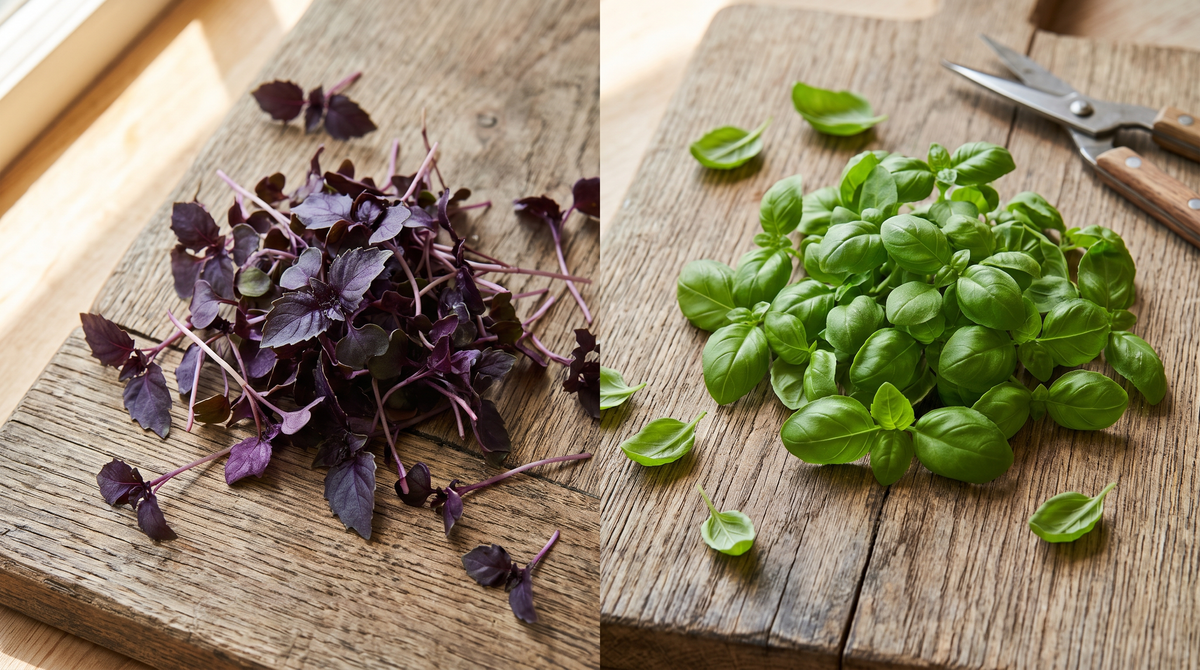
Basil microgreens are young edible basil seedlings. They’re different from mature basil leaves, but the easiest way to understand them is still through the kitchen. Use them where a small amount of fresh basil character makes sense, then let the crop in front of you guide the pairing.
That last part matters because basil isn’t one uniform flavor. Cultivars differ, and growing conditions can change measurable crop traits. A 2023 controlled study of 21 basil cultivars and genotypes found differences in leaf color, yield, vitamin C, anthocyanins, phenolics, flavonoids, and laboratory antioxidant measures. Those findings don’t give every basil microgreen the same profile. They show why the cultivar name and the actual crop matter.
Research on mature sweet basil gives some useful aroma context. In one trained-panel study, seven mature basil accessions had different sensory and chemical profiles. The study connected certain compounds with perceptions such as anise, sweet, clove, spicy, bitter, floral, and lemon. But it studied mature basil, not basil microgreens, Dark Opal, or a Wilshires tray. It can explain why basil varieties may differ. It can’t tell us exactly how a particular microgreen crop tastes.
That distinction keeps a useful study from becoming an unsupported product description.
Start with the Dish, Then Taste the Crop
Basil microgreens work best as a practical ingredient, not a kitchen puzzle. Try adding them after cooking to pizza, pasta, soup, eggs, or roasted vegetables. You can fold them into salads, grain bowls, sandwiches, wraps, or tomato-and-cheese dishes. They can also go into pesto, dressing, herb oil, or compound butter, though blending gives up the intact form.
These are serving ideas, not rules. A simple approach is to taste first and pair second. If the crop’s basil character fits the dish, use enough to notice it without covering everything else. You don’t need a claim that one pinch replaces a set number of mature leaves. No reliable substitution ratio was established in the research used here.
Basil microgreens also vary in appearance. Controlled studies include green and red or purple research material. That doesn’t prove the color of a current Wilshires crop, and color by itself doesn’t tell you the crop’s full composition. It simply means shoppers and cooks shouldn’t expect every basil microgreen to look or perform the same way.
Growing research points to the same lesson. In controlled basil-microgreen studies, cultivar, light, nutrition, and their interactions changed biomass, pigments, and other measured traits. Under each study’s conditions, the response depended on the material and setup being tested. Those experiments help researchers understand the crop. They aren’t universal tray recipes, and their trial durations aren’t harvest promises.
Handle Basil Microgreens Like Fresh Produce
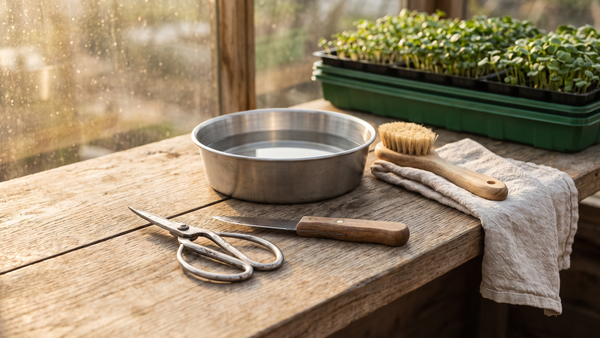
Harvest timing should follow crop development and quality, not a day count borrowed from one experiment. General guidance from Penn State Extension recommends cutting microgreens with a clean, sharp knife or scissors. For home handling, keep hands, tools, cutting boards, and storage areas clean.
Prevent cross-contamination by keeping microgreens away from raw meat, poultry, seafood, and the utensils used with them. FDA guidance says to rinse fresh produce thoroughly under running water. Don’t use soap, detergent, or commercial produce wash. Washing can reduce surface bacteria, but it doesn’t eliminate them.
Keep perishable herbs and similar produce in a clean refrigerator at 40°F or below. Because microgreen tissues are delicate, Penn State notes that washing before storage can shorten shelf life. Cold storage followed by rinsing close to use is one practical option. Check the package directions when provided and use the crop while its quality is still good.
The cited basil studies measured crop composition, biomass, pigments, or laboratory antioxidant activity. Those measurements don’t establish health outcomes in people. That’s why the useful story here stays simple: basil microgreens are a fresh culinary ingredient, cultivars can differ, and careful handling matters.
You don’t need special handling tricks beyond sound fresh-produce habits.
Final Thoughts from Wilshires Organics
Basil microgreens don’t need exaggerated claims to earn a place in the kitchen. Add them to familiar food, taste the crop you have, and choose the pairing from there. Treat them as perishable fresh produce, keep your tools clean, prevent cross-contamination, and rinse them under running water before use.
The research supports a careful way to talk about this crop. Basil cultivar and growing conditions can affect measured traits, but one experiment doesn’t define every tray. Mature-basil aroma research helps explain why varieties may differ, but it doesn’t supply a flavor description for basil microgreens. Laboratory crop measurements don’t prove a result in people. Keeping those boundaries clear leaves plenty to say about how basil microgreens fit into everyday cooking.
Start small when you use them. Add some after cooking, taste the dish, and adjust. If you blend them into a dressing or pesto, remember that you’ll lose the intact form. If you want them visible, use them as a finish instead. Neither method is the right one for every meal.
Good information should help you make a decision without making a bigger promise than the evidence allows. For basil microgreens, that means practical serving ideas, cultivar-specific language, and concrete food-handling steps.
If you want to see what Wilshires Organics is offering, check the order page for what is currently listed.
Want fresh-cut microgreens this week? We harvest to order in Ocala and have them ready for pickup. See what's available and reserve your tray.