Stuck Seed Hulls: When to Wait and When to Help
Stuck sunflower seed hulls? Learn when to wait, when gentle help makes sense, and how weighted germination can reduce the problem.

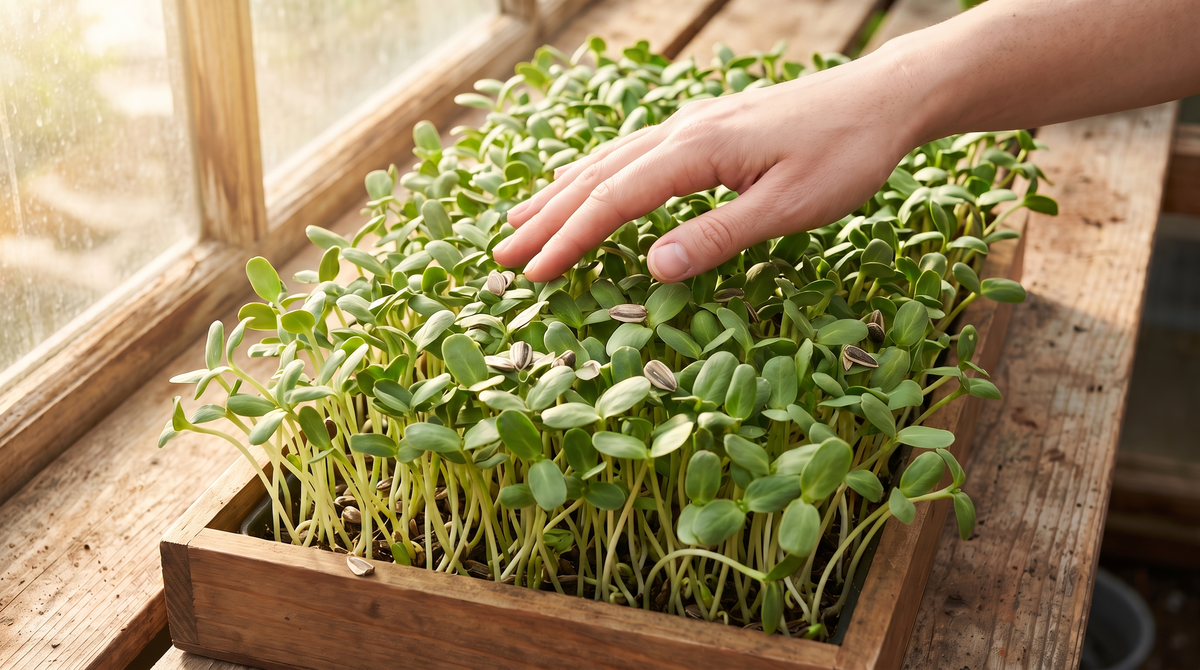
Sunflower microgreens commonly come up with seed hulls still attached to the cotyledons, which are the first seed leaves. Seeing those hulls can make you want to start picking at the tray. Most of the time, that's not the best first move.
Start by looking at what the hull is doing. If it's loosening, the cotyledons are opening, and the seedling is standing upright, leave it alone. If the hull is holding the cotyledons closed, very gentle help may be reasonable. The key word is gentle. A hull that resists isn't ready to come off by hand.
Prevent the Problem During Germination
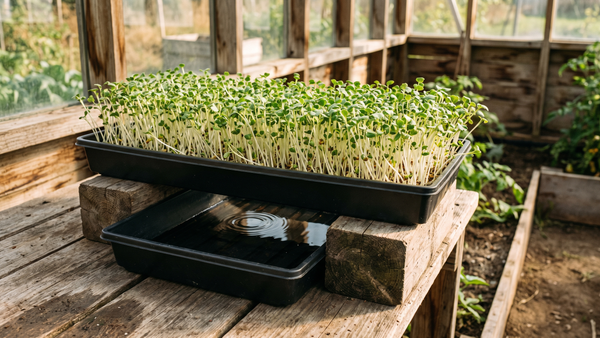
The best time to manage sunflower hulls is before you're dealing with them one seedling at a time. Penn State Extension recommends keeping weight over sunflower and some other microgreen shoots during germination. That contact can help the hulls detach from the cotyledons as the shoots emerge.
Moisture matters too. University of Minnesota Extension recommends keeping seed-starting medium evenly moist, not dry and not soggy. That's useful germination guidance, but it doesn't tell you why one particular hull stayed attached. Crop type, the seed covering, and the way the shoot emerged may all play a part.
For a sunflower tray, focus on steady germination conditions and proper weight rather than planning to remove hulls later. Tray-level prevention means less plant-by-plant handling once the shoots are up.
A retained hull isn't automatically a problem that needs correction. Look at the cotyledons and stem before doing anything.
Leave the hull alone when it has started to loosen, the cotyledons are opening, and the seedling is upright. Waiting in that situation avoids unnecessary handling and the added possibility of handling damage. A loose hull may release as the seedling continues to open.
Consider helping when the hull is physically keeping the cotyledons together. That's a practical decision point, not a reason to pull. Cotyledons support early seedling establishment, and the stem is tender. Pinching or pulling a firmly attached hull can tear a cotyledon or bend the stem.
The appearance of a tray can tempt you to treat every attached hull the same way. Don't. Judge the individual hull by whether it's loosening and whether it's blocking the cotyledons. If it isn't obstructing growth, patience is usually the cleaner choice.
If You Help, Keep the Touch Light
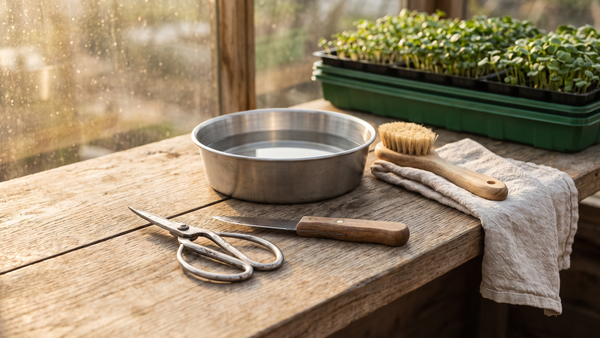
USDA recommends washing hands and keeping food-contact surfaces clean. Do that before touching the canopy. Microgreens are eaten young and often raw. A food-safety review identifies seeds, water, growing medium, equipment, and handling as potential contamination routes, so limiting unnecessary contact is a good working habit.
For a hull that's holding the cotyledons closed, use a light touch. A small amount of clean water can help moisten a dry hull. Then brush lightly across the sunflower canopy. Epic Gardening describes light hand brushing as a grower practice for removing attached sunflower hulls in a group.
Only work with hulls that release with almost no resistance. If one holds on, stop. Don't turn a small obstruction into torn seed leaves or a bent stem by forcing it.
Light brushing is an established grower practice. The full sequence of moistening, giving the hull a little room to soften, brushing gently, and stopping on resistance is a conservative practical approach. It isn't a license to keep working at a stubborn hull. Resistance is the stopping point.
The main lesson isn't how to pick hulls. It's how to reduce the need to pick them. For sunflower, weighted germination can help with hull release. Even moisture supports germination without letting the medium dry out or stay soggy. Together, those steps give the tray a better chance to shed hulls during emergence.
Once the tray is up, handle only what needs handling. Light brushing across loose hulls is different from pinching at individual seedlings. Fewer unnecessary touches also mean fewer handling opportunities around food that may be eaten raw.
This approach keeps the decision simple. Watch a loose, non-obstructive hull. Consider gentle help when a hull keeps the cotyledons from opening. Stop as soon as it resists.
Final Thoughts from Wilshires Organics
A sunflower hull still sitting on a seedling doesn't always call for action. Check whether the cotyledons are opening and whether the hull is loosening. If they are, let the seedling keep working.
When a hull blocks the cotyledons, clean hands, a little moisture, and a light brushing motion are reasonable steps. Don't pull against resistance. Favor good germination moisture and proper weight over repeated picking after emergence.
Want fresh-cut microgreens this week? We harvest to order in Ocala and have them ready for pickup. See what's available and reserve your tray.