Tired of Mild Greens? Grow Cress and Mustard Microgreens for More Flavor
Grow cress and mustard microgreens with practical guidance on trays, timing, moisture control, harvest, and simple ways to use them.

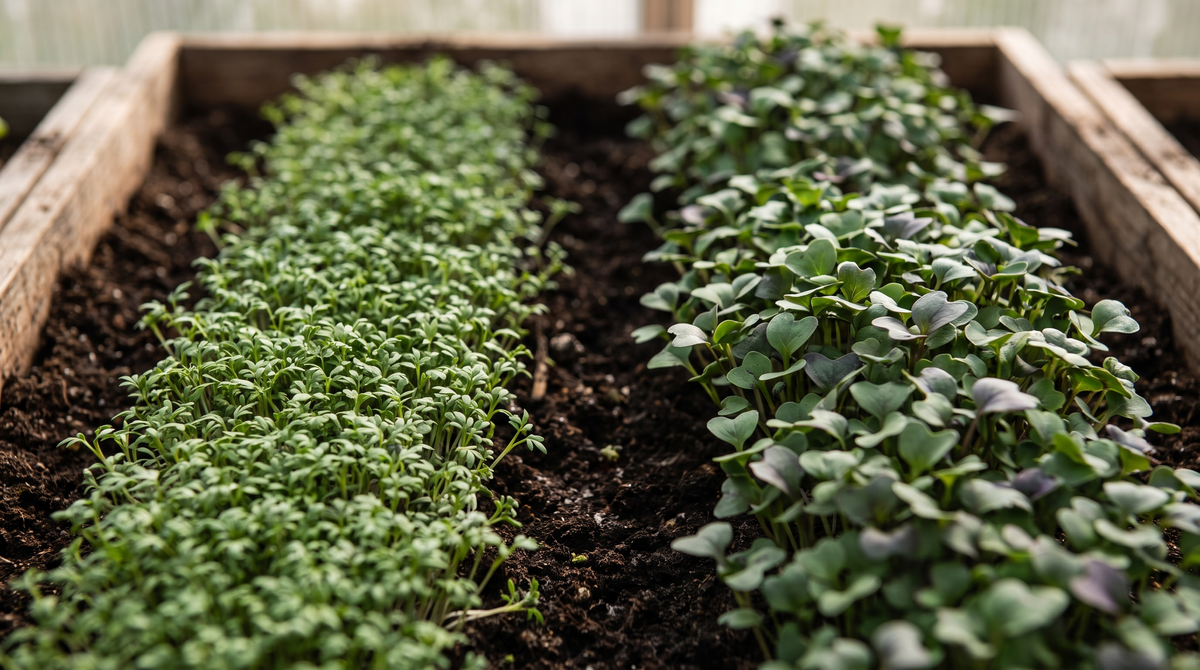
Some meals need more than another mild green. Cress and mustard microgreens can give cooks a more assertive option in a small garnish. “Peppery pair” is a useful way to describe them in the kitchen, but it isn't a promise that every cultivar will taste the same. Type, growing conditions, and harvest stage can all affect the result.
Garden cress is Lepidium sativum. Indian or brown mustard is Brassica juncea. Both belong to the Brassicaceae family, but “mustard microgreens” isn't one uniform crop. Indian mustard, red mustard, and other mustard types need to stay distinct when we talk about research or choose seed.
That difference is part of the reason to grow them. A side-by-side tray lets you compare two related greens for yourself. It also gives you more choice when mild lettuce doesn't fit the meal.
Why This Pair Is Approachable to Grow
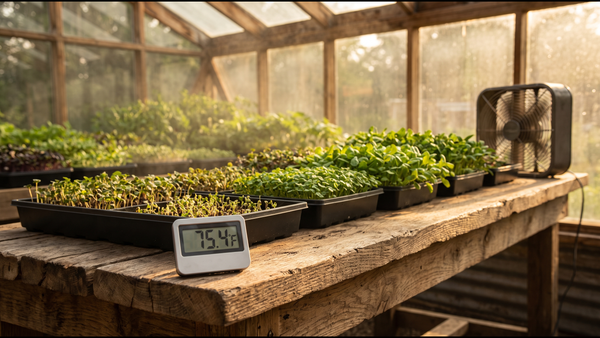
Microgreens are harvested as young seedlings rather than grown to mature-vegetable size. They can fit into limited space because they grow in shallow trays and don't need much medium. Basic supplies include seed, drinking water, a clean tray, food-suitable growing medium or a mat, something for watering, and clean cutting tools.
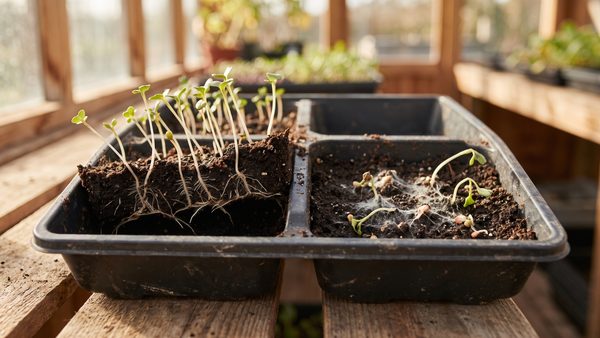
Penn State Extension's home-growing guide lists peat-based mixes, coconut coir, and fiber mats among the possible media. Those materials don't all hold water or provide nutrients in the same way, so choose one meant for food production and learn how it behaves in your setup.
Harvest timing isn't fixed. Penn State says microgreens may be ready from a few days to a couple of weeks after germination, depending on the species and growing conditions. Its guide includes an eight-day mustard photo sequence, but that's an example, not a guarantee. One greenhouse study also harvested Indian mustard on day eight after sowing under that experiment's conditions. Neither source gives every grower a universal schedule.
That's the practical promise here. Cress and mustard can offer a compact setup, a short but variable crop cycle, and a useful growing comparison without needing a full garden bed.
Start Clean and Manage Moisture
Begin with a clean tray and a clean medium that's suitable for growing food. Spread seed evenly and use the seed supplier's guidance for your tray, seed lot, cultivar, and system. More seed isn't automatically better.
In one controlled study of cress, rocket, and pea microgreens, increasing seed density raised fresh biomass up to a threshold. Higher densities were also associated with higher counts of aerobic bacteria, Enterobacteriaceae, and fungi. That was one study involving three crops, not a rate sheet for every tray. The useful takeaway is simpler: don't treat “as thick as possible” as a sound growing rule.
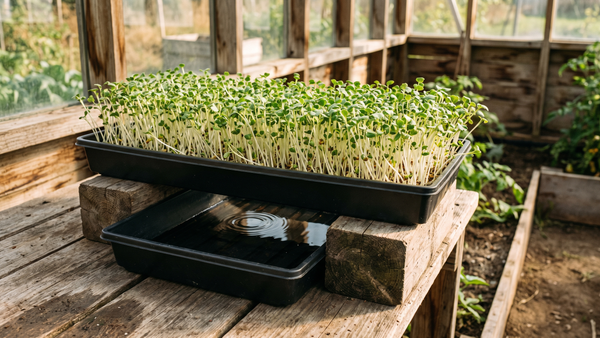
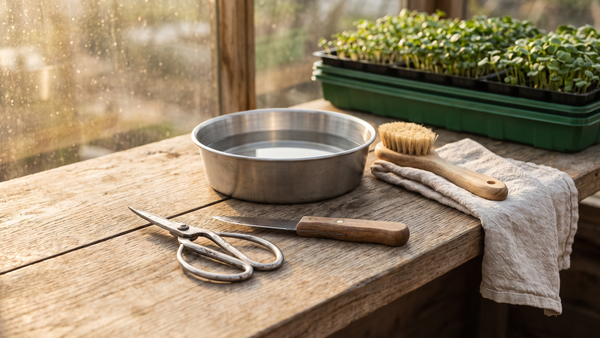
Drainage and moisture control matter. Use a tray that can drain, avoid excess water, and let the medium drain after watering. Bottom watering can reduce water contact with the greens. Air circulation can also help avoid excess moisture. At harvest, use a clean, sharp knife or scissors and cut above the medium.
Penn State advises washing microgreens in fresh drinking water before eating. Washing isn't a safety guarantee, and the guide notes that it can shorten shelf life. If you're storing the greens, washing just before use may make more sense. Prevention still comes first: clean inputs, drinking water, good drainage, moisture control, and clean tools.
Microgreens and sprouts aren't interchangeable production systems. Microgreens grow in a medium, receive light after germination, drain, and are cut above the medium. That's a production difference, not a claim that one is safer than the other.
Put the Flavor Where It Helps
Use cress or mustard microgreens as a small finishing ingredient. Try them on eggs, sandwiches, salads, tacos, grain bowls, or roasted vegetables. For soup, add them after cooking. These are serving ideas, so start with a small amount and decide what works for you.
Research also supports keeping expectations specific. A 2024 study of 14 Brassica-family microgreens found sensory differences and different levels of consumer acceptance among the tested types. It doesn't establish one flavor profile for all mustard microgreens, and it doesn't show that cress and mustard taste identical.
If you're growing both, label the trays and compare them at the same stage. A side-by-side tasting can teach you more about your chosen seed than a broad description on a page.
Final Thoughts from Wilshires Organics
Cress and mustard microgreens are worth considering when you want more flavor choice and a crop that fits a shallow tray. The growing process is straightforward, but it still rewards attention to seed spacing, drainage, moisture, and clean tools.
Grow them for the practical experience and the choices they give you in the kitchen. Keep the schedule flexible, follow guidance for the seed and system you're using, and let your own side-by-side comparison tell you where each one belongs.
References
- A Step-By-Step Guide for Growing Microgreens at Home
- Indian Mustard Microgreen Greenhouse Study
- Brassicaceae Microgreen Sensory Comparison
- Cress, Rocket, and Pea Seed-Density Study
Want fresh-cut microgreens this week? We harvest to order in Ocala and have them ready for pickup. See what's available and reserve your tray.