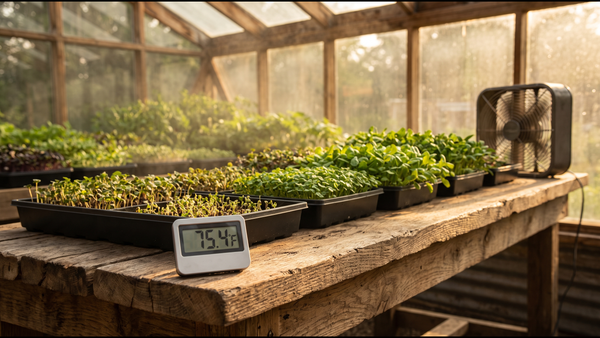
Miss Your Harvest Window? How Greenhouse Temperature Controls Your Microgreen Schedule
Greenhouse temperature controls your microgreen schedule. Learn the 60-75°F target, how warm temps speed harvest but cut yield, and how to adjust sowing.

Greenhouse temperature controls your microgreen schedule. Learn the 60-75°F target, how warm temps speed harvest but cut yield, and how to adjust sowing.
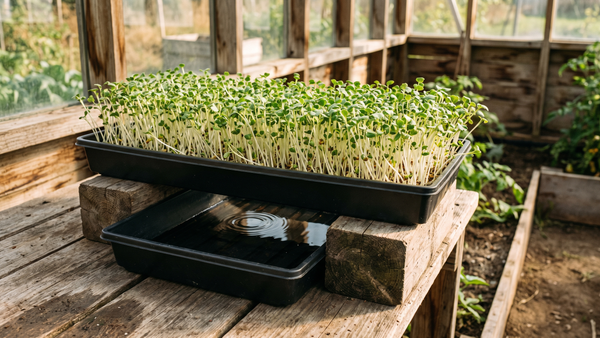
Learn how tray drainage helps you manage excess water in microgreens, with practical limits on what drainage can and cannot do.
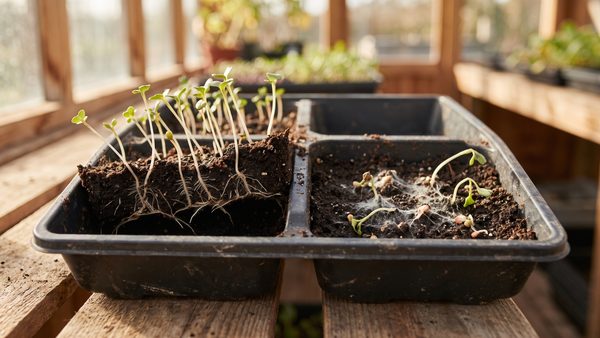
Root hairs or mold on microgreens? Use attachment, water response, and seedling condition to check a tray and decide on a cautious next step.
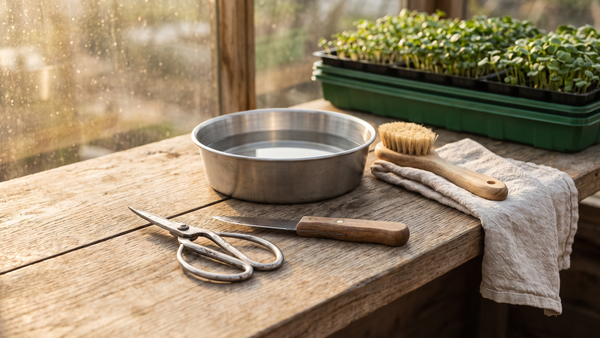
Harvest tools carry whatever they pick up from tray to tray. Here's the two-step clean-then-sanitize routine we use on our farm.
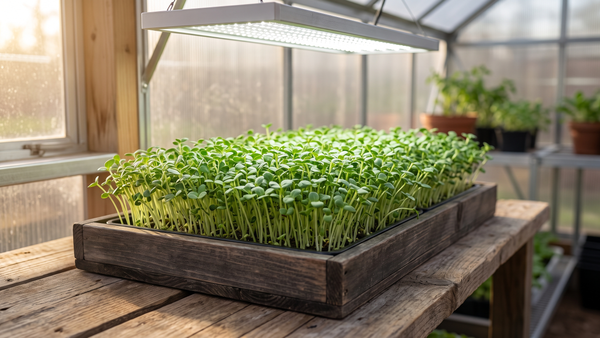
Microgreens leaning after blackout? Learn how PPFD, lamp hours, DLI, spectrum, and crop response can guide a practical lighting setup.
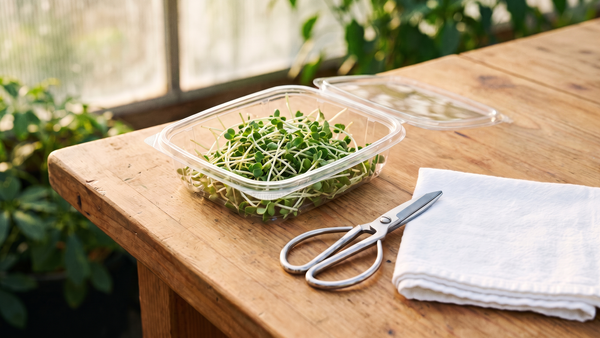
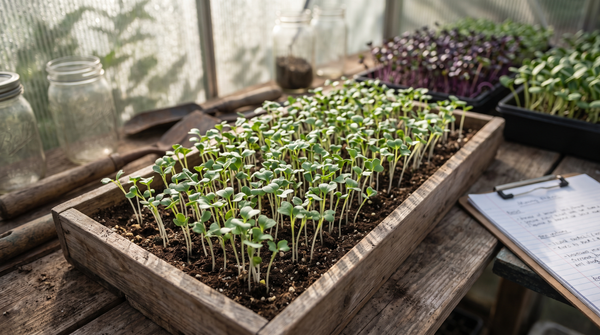
Protect microgreen freshness after harvest with practical guidance on clean tools, gentle handling, prompt cooling, packaging, and home storage.
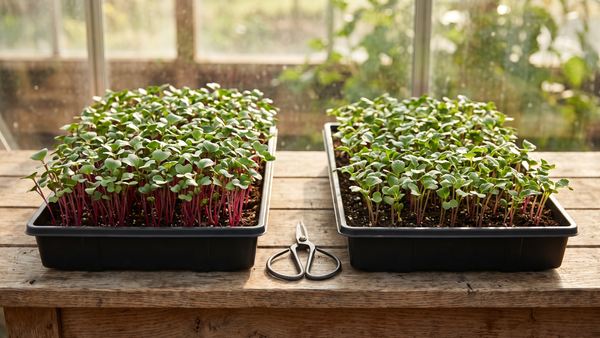
Learn why microgreen harvest timing can affect flavor and how to compare crop stages without relying on one universal peak day.
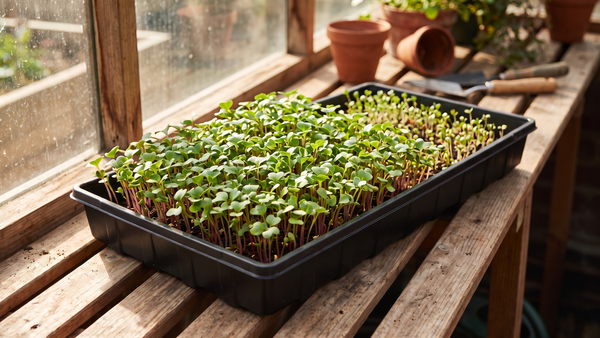
Use one microgreen tray as a baseline. Learn what to watch, what to record, and how to carry one clear question into your next grow.
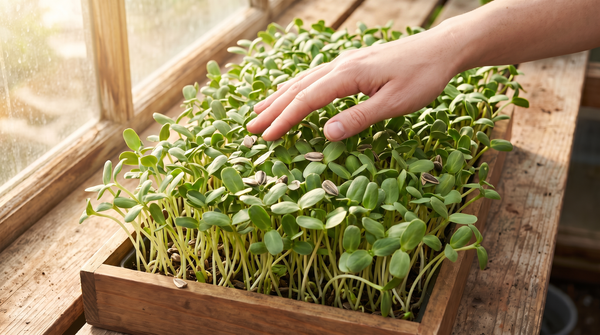
Stuck sunflower seed hulls? Learn when to wait, when gentle help makes sense, and how weighted germination can reduce the problem.
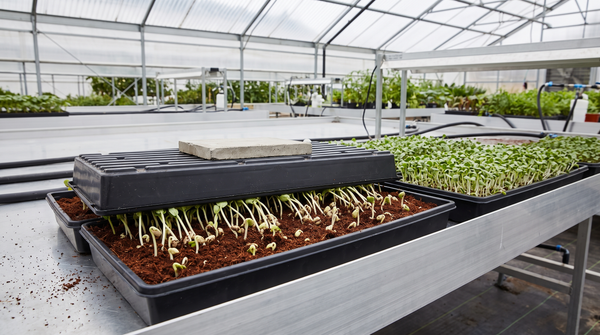
Learn when microgreen trays may need covers or weight, what each tool does, and which crop-specific cues can guide the move to light.
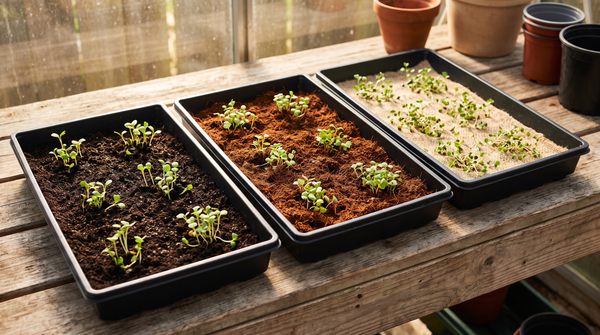
Choosing a microgreen growing medium? Compare water, air, salts, crop response, and food-safety factors before deciding.
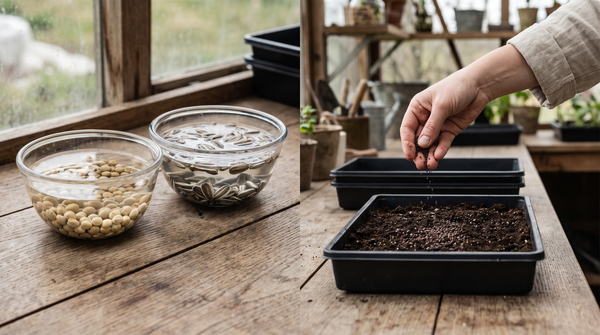
Learn why some microgreen seeds benefit from soaking, why most don't need it, and how crop directions, moisture, drainage, and air guide the choice.
Microgreens
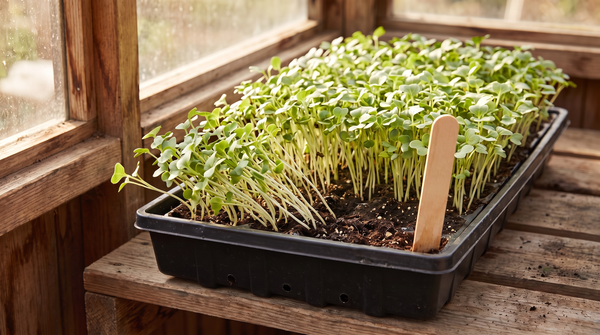
Microgreens falling over? Use this practical checklist to inspect stems, light, drainage, moisture, density, and crop-specific clues first.
Microgreens
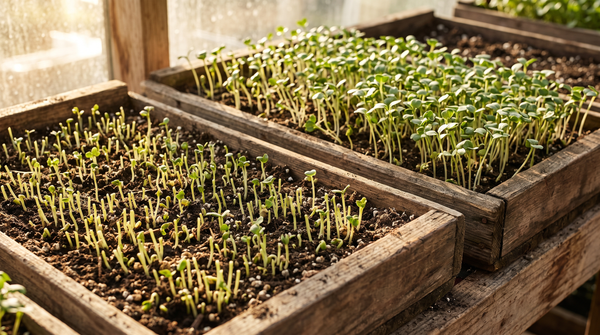
Can microgreens regrow after harvest? Most don't. Pea shoots may give a thin second cut. Here's what the research says and what actually works.
Microgreens
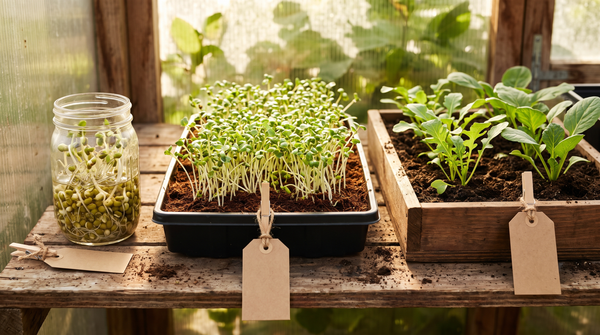
Sprouts, microgreens, and baby greens aren't the same. Here's how they differ in growing method, nutrition, safety, and flavor, plus why we grow microgreens.
Microgreens
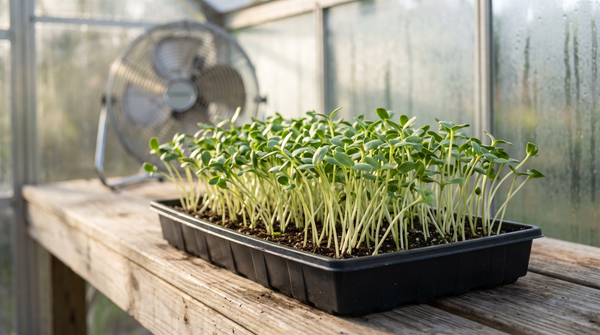
Florida humidity changes microgreen moisture management. Learn how to handle airflow, irrigation, condensation, sanitation, and cooling.
Microgreens
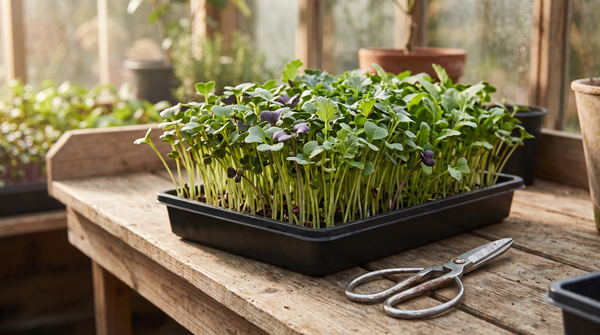
Learn the leaf-stage signs that show when microgreens are ready to harvest, plus practical checks for height, moisture, color, and a clean cut.
Microgreens
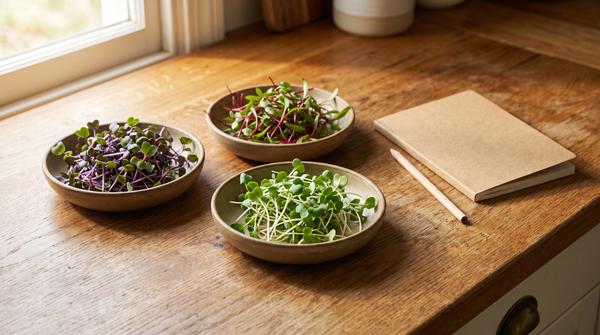
Do microgreens help digestion? See what two small human studies found, what lab research can tell us, and where the evidence still stops.
Microgreens
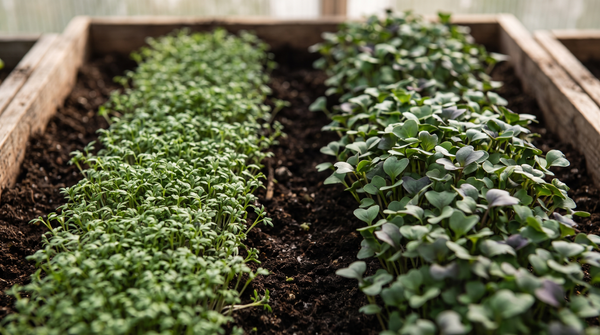
Grow cress and mustard microgreens with practical guidance on trays, timing, moisture control, harvest, and simple ways to use them.
Microgreens
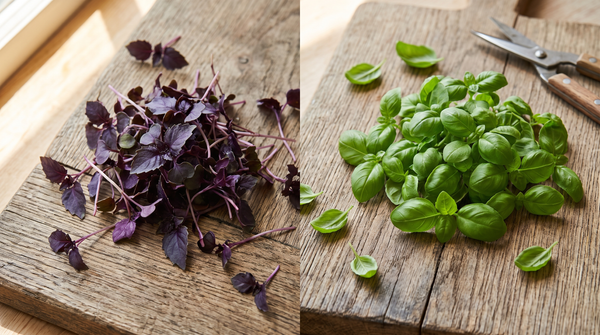
Basil microgreens vary by cultivar. Learn practical serving ideas, what controlled studies show, and how to handle them as fresh produce.
Microgreens
Sulforaphane research is more complicated than the 40-100x headline. Learn what studies show about sprouts, microgreens, processing, and limits.
Microgreens
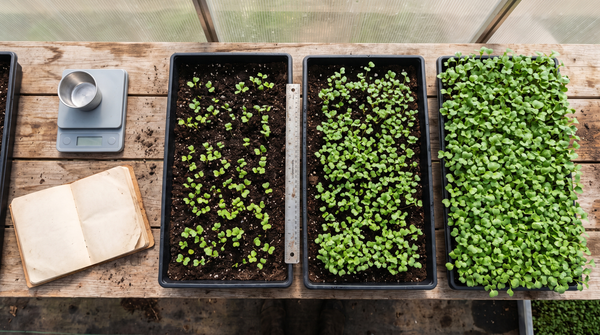
Stop guessing at microgreen seeding rates. Measure tray area, check germination, and run side-by-side trials to find a marketable stand.
Microgreens
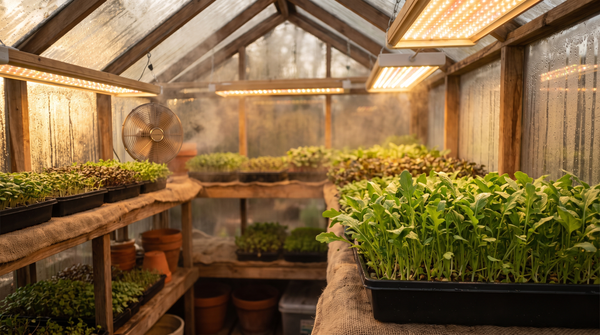
What makes one tray of microgreens look bright, sturdy, and fresh while another turns soft or stretched? This Wilshires Organics article explains how light, humidity, and airflow affect real microgreen quality in plain language from the greenhouse.
Microgreens
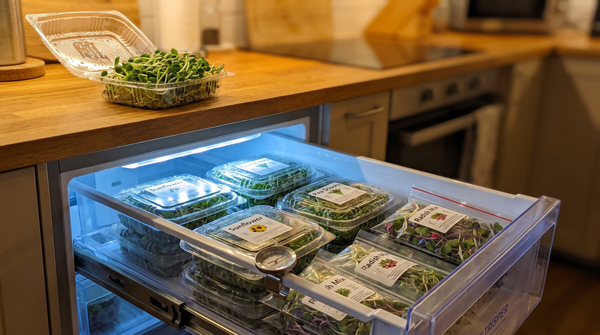
Microgreens can last 14 days or spoil in 24 hours. Here's the research on temperature, moisture, and containers that keeps your harvest fresh longer.